 Belly Care
Feeling gassy is one of those things almost everyone experiences but few people talk about. The good news is that most gas is completely normal. It is a sign your gut bacteria are doing their job, breaking down the food you eat. The trickier part is figuring out when it is just your body ticking along nicely, and when a pattern is worth paying attention to.
If you have been wondering "why am I so gassy?", you are in the right place. Below you will find the most common causes of bloating and gas, practical ways to spot your personal triggers, and simple changes that may help, all grounded in what the research actually says.
Gas is normal, but persistent bloating is worth noticing
Your gut produces gas every single day. It comes from two main sources: air you swallow while eating or drinking, and gas released when your gut bacteria ferment undigested carbohydrates in your colon. According to the NIDDK, some gas after eating is completely expected and not a sign anything is wrong.
The difference between normal gas and bothersome gas is usually about frequency, comfort, and impact on your day. If you are regularly bloated, uncomfortable, or finding that gas is affecting your life, that is worth exploring. Not panicking about, but paying attention to.
The key shift is moving from ignoring it to noticing patterns. Most of the time, there is a dietary or lifestyle reason hiding in plain sight.

Common patterns behind excess gas
Eating too fast or not chewing well
When you rush a meal, you swallow more air than you realise. That air has to go somewhere, and it usually ends up causing discomfort. Chewing thoroughly also starts the digestive process earlier, meaning less undigested food reaches your colon to be fermented.
High-FODMAP foods
FODMAPs are a group of fermentable carbohydrates that your small intestine cannot fully absorb. When they reach your colon, gut bacteria ferment them and produce gas. Common culprits include onions, garlic, beans, lentils, wheat, apples, pears, and stone fruits.
Research on gut microbiota and intestinal gas confirms that dietary fibre and fermentable residue are two of the biggest drivers of how much gas your body produces. Everyone's gut responds differently, which is why testing one food at a time tends to give you much cleaner information than cutting everything out at once.
Too much fibre, too fast
Fibre is genuinely good for your gut, but ramping it up overnight can temporarily increase gas while your microbiome adjusts. A sudden jump from low to high fibre is one of the most common reasons people experience excessive gas after eating more vegetables, wholegrains, or legumes.
Carbonated drinks and sugar alcohols
Fizzy drinks introduce carbon dioxide directly into your digestive tract. Sugar alcohols like sorbitol, xylitol, and mannitol, found in sugar-free gum, mints, and some "diet" foods, are poorly absorbed and fermented by gut bacteria, often causing significant gas and bloating. Better Health Channel lists both as well-established gas triggers.
Constipation and slow transit
When stool moves slowly through your colon, gas gets trapped behind it. This is one of the most overlooked connections between gas and constipation. Treating the constipation often improves the bloating too. Ohio State's digestive health team highlights slow transit as a key reason gas builds up and becomes uncomfortable.
Swallowing air (aerophagia)
Chewing gum, drinking through straws, eating while anxious, and talking while eating all increase the amount of air you swallow. It is a surprisingly common cause of excess gas that is easy to reduce once you are aware of it.
How to track your gas patterns
Gas triggers are not the same for everyone. Onions might cause real discomfort for one person and have no effect on another. That is why tracking is far more useful than following a generic list of foods to avoid.
Start by logging what you eat and noting when gas or bloating appears. A clinical review on gas and bloating points out that symptoms often reflect altered gas transit or increased gut sensitivity rather than simply producing more gas. That means timing and context matter as much as the food itself. Gas typically appears 30 minutes to two hours after eating a trigger food.
Also note your stool pattern. The Bristol Stool Scale is a simple way to track whether constipation might be contributing. Belly Care uses the Bristol scale to help you spot the link between your bowel habits and bloating, so you are not left guessing.
Do not forget to log how fast you ate and your stress levels that day. Anxiety genuinely affects digestion. It can speed up or slow down gut motility and make you more sensitive to normal amounts of gas.
After about seven days of consistent logging, patterns usually start to emerge. You might notice that bloating always follows a particular meal, or that it is worse on stressful days regardless of what you ate. Belly Care tracks your meals and symptoms together and surfaces these connections automatically, so you do not have to do the detective work alone.

Practical things to explore
Slow down at mealtimes
Try chewing each bite 20 to 30 times and putting your fork down between bites. It sounds simple, but it genuinely reduces the amount of air you swallow and gives your digestive enzymes more to work with before food reaches your colon.
Build fibre up gradually
If you are increasing vegetables, legumes, or wholegrains, do it over two to three weeks rather than all at once. Your gut microbiome adapts, and the gas that comes with a sudden fibre increase usually settles once it does. Better Health Channel is clear that fibre itself is not the enemy. It is the sudden jump that causes temporary trouble.
Test one food at a time
Rather than cutting out everything that might cause gas at once, try removing one suspected trigger for a week and see what happens. Testing one high-FODMAP food at a time, for example, gives you much cleaner information about what is actually affecting you.
Swap fizzy drinks
Still water, herbal teas, or diluted cordial are easy swaps that remove one reliable source of gas. If you love sparkling water, it is worth trialling a week without it to see whether it is contributing.
Move gently after eating
A 10-minute walk after a meal can genuinely help gas move through your digestive tract more comfortably. Cleveland Clinic notes that gentle movement supports gut motility and can ease the discomfort of trapped gas.
Address constipation first
If you are regularly constipated, that is often the most important thing to tackle. Improving stool transit through hydration, gradual fibre increases, and movement frequently reduces bloating and gas at the same time.
Manage stress where you can
Your gut and brain are in constant communication. Stress and anxiety can alter gut motility, increase sensitivity to gas, and worsen bloating even when your diet has not changed. Small daily habits, such as a short walk or a few minutes of slow breathing before meals, can make a real difference for some people.
A note on remedies
Over-the-counter simethicone may help relieve the discomfort of gas for some people, though it does not address the underlying cause. Charcoal supplements are widely marketed for gas, but Better Health Channel notes they usually have no proven benefit. Probiotics show some early promise for reducing gas in certain people, but the evidence is still mixed and very strain-specific, so they are not a guaranteed fix for everyone.
When to see a doctor
Most gas is harmless and responds well to the kind of pattern-spotting and lifestyle tweaks described above. But some symptoms are worth getting checked out, especially if they are new or persistent.
Please see your doctor if you notice any of the following alongside your gas or bloating:
- Abdominal pain that does not go away or is getting worse
- Unexplained weight loss
- Blood in your stool or rectal bleeding
- A sudden change in your bowel habits that lasts more than a few weeks
- Persistent diarrhoea or constipation
- Fever or vomiting alongside digestive symptoms
- Marked swelling or distension of your abdomen
- Gas that has not improved after two to three weeks of tracking and making changes
Harvard Health notes that a sudden onset of gas you have never experienced before, especially alongside any of the symptoms above, is worth discussing with a doctor promptly. A GP can rule out conditions like IBS, lactose intolerance, coeliac disease, and other patterns that are worth investigating properly.
Gas is easy to dismiss or feel embarrassed about. But if it is affecting your quality of life, you deserve to understand why and to feel better. Start with a week of logging your meals and symptoms, look for patterns, and make one small change at a time. That is usually where the answers are.


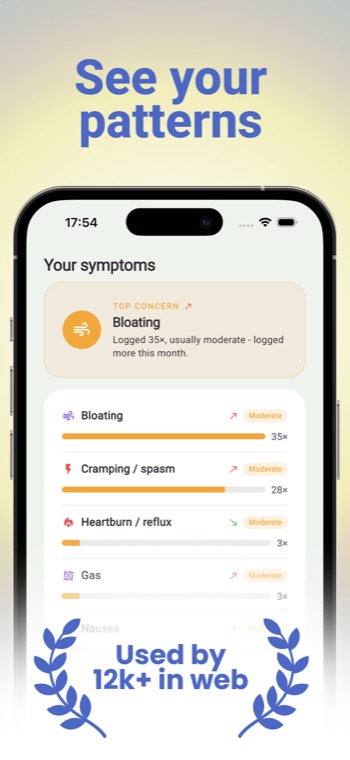
Find your own gut patterns
Belly Care turns a few honest minutes a day into a clear picture of what's linked to how you feel — bloating, IBS, energy and mood.
Download on the App StoreSources
- The science on gut microbiota and intestinal gas - ISAPP
- Why am I so gassy and what can I do about it? - Ohio State
- Feeling gassy: is it ever a cause for concern? - Harvard Health
- Gas in the digestive tract - NIDDK
- Flatulence - Cleveland Clinic
- Flatulence - Better Health Channel
- Gas and bloating - PMC/NIH review
Belly Care helps you observe patterns and build healthy habits — it doesn't diagnose or treat any condition. The patterns it surfaces are starting points to explore, not medical advice. For persistent symptoms, please see a doctor.
Frequently asked questions
Is it normal to be gassy all day?
Passing gas multiple times a day is completely normal. Most people do it more often than they realise. Gas is a natural by-product of digestion, produced when gut bacteria ferment undigested carbohydrates in your colon. If you are uncomfortable or bloated throughout the day, that is worth exploring, but the gas itself is not automatically a sign something is wrong.
What foods cause the most gas?
The biggest culprits tend to be high-FODMAP foods such as onions, garlic, beans, lentils, apples, pears, and wheat. Cruciferous vegetables like broccoli and cabbage, dairy products if you are sensitive to lactose, carbonated drinks, and foods containing sugar alcohols like sorbitol or xylitol are also common triggers. Everyone's gut is different, so the best approach is to test one food at a time rather than cutting everything out at once.
Can stress make you gassier?
Yes, it genuinely can. Your gut and brain are closely connected through the gut-brain axis. Stress and anxiety can alter how quickly food moves through your digestive tract, increase your sensitivity to normal amounts of gas, and worsen bloating even when your diet has not changed. Many people find their digestive symptoms improve when they address stress alongside dietary changes.
How long does it take to see if a food triggers gas?
Gas from a specific food typically appears within 30 minutes to two hours after eating it, though it can sometimes take longer depending on how quickly food moves through your system. When trialling the removal of a suspected trigger, give it at least five to seven days to get a clear picture, since other variables like stress, eating speed, and constipation can affect results on any given day.