 Belly Care
Healthy poop is typically medium to dark brown, soft, formed like a smooth sausage, and easy to pass without straining. If that description matches what you see most days, your digestion is probably doing its job well.
That said, what counts as "normal" varies more than most people realise. Frequency, shade, and texture all shift with what you eat, how much you drink, and how stressed you are. The key is knowing your own baseline and spotting when something genuinely changes.
The Bristol stool scale: your reference guide
The Bristol stool scale is a seven-type chart developed by researchers at the University of Bristol. Doctors use it because it gives everyone a shared language for describing stool consistency, which turns out to be one of the most useful clues about how your gut is working.
Here is a quick rundown of all seven types:
- Type 1 - Separate hard lumps, like little nuts. Signals severe constipation.
- Type 2 - Lumpy, sausage-shaped. Mild to moderate constipation.
- Type 3 - Sausage-shaped with cracks on the surface. Normal.
- Type 4 - Smooth, soft sausage or snake shape. Ideal.
- Type 5 - Soft blobs with clear edges. Borderline loose.
- Type 6 - Fluffy, mushy pieces. Tends toward diarrhea.
- Type 7 - Completely watery, no solid pieces. Diarrhea.
Types 3 and 4 are the sweet spot. They are soft enough to pass comfortably but formed enough to hold their shape. According to GoodRx's guide to the Bristol stool chart, these two types are consistently associated with healthy gut transit time and a comfortable bathroom experience.
Consistency matters more than frequency. A type 4 stool every other day is healthier than a type 1 or 6 stool every single morning. Think of the scale as a compass, not a report card.
One gentle note: it is easy to become a little fixated once you start paying attention. Use the scale as a loose reference rather than something to stress over daily. Occasional dips into type 2 or 5 territory are completely normal.
Color, texture, and other signs to notice
What brown actually tells you
The brown color of healthy stool comes from bilirubin, a byproduct of red blood cell breakdown that gets processed by your liver and excreted in bile. Johns Hopkins Medicine notes that the shade can range from light tan to dark espresso and still be perfectly normal.
Darker brown often means a slightly slower transit time, meaning food spent longer in your colon. Lighter tan can mean the opposite. Both are fine as long as the color stays in the brown family.
Colors worth a closer look
Some color changes are harmless and food-related. Green stool after a big salad or a green smoothie is totally normal; it just means things moved through a bit quickly. Yellow or orange after eating lots of carrots or taking certain supplements is also usually nothing to worry about.
Some colors are worth taking seriously, especially if they persist. MedStar Health's guide to healthy bowel movements flags these as colors that warrant attention:
- Bright red or maroon - may indicate fresh blood from the lower GI tract.
- Black and tarry - can signal digested blood from higher up in the GI tract, unless you are taking iron supplements or bismuth, which can also darken stool.
- Pale, clay-colored, or chalky white or gray - may point to a problem with bile flow, the liver, gallbladder, or pancreas.
If you notice any of these and they do not clear up within a day or two, it is worth checking in with your doctor.
Why texture varies day to day
Your stool's texture directly reflects what went into your body in the last 24 to 72 hours. A low-fiber day, a salty meal, a stressful afternoon, or a poor night's sleep can all nudge you toward a different Bristol type. That is not a sign something is wrong; it is simply your gut responding to its environment.
Floating vs. sinking
Most healthy stools sink. Occasional floating is usually caused by extra gas and is nothing to worry about. But if your stool floats consistently, looks greasy, and smells particularly foul, that pattern can sometimes suggest your body is not absorbing fat properly. Healthline's overview of stool types notes that persistent greasy, floating stools are worth mentioning to a doctor.
What patterns to explore in your own digestion
Linking meals to stool changes
Your gut does not react to food instantly. Transit time from mouth to toilet is typically 24 to 72 hours, so the stool you pass on Tuesday morning might reflect what you ate on Sunday. That lag makes it genuinely tricky to spot connections without some kind of record.
This is where Belly Care can make a real difference. Logging your meals and stool type together over a week or two makes those delayed connections visible in a way that memory alone cannot manage.
Fiber and consistency
Fiber is one of the biggest levers you have over stool consistency. Soluble fiber, found in oats, beans, and apples, absorbs water and softens stool. Insoluble fiber, found in wholegrains, leafy greens, and nuts, adds bulk and helps things move along. Most adults get far less than the recommended 25 to 38 grams per day, which partly explains why types 1 and 2 are so common.
Increasing fiber gradually alongside plenty of water is one of the most evidence-backed ways to nudge your stool toward that type 3 to 4 sweet spot. Jumping in too fast can cause bloating, so slow and steady wins here.
Hydration, stress, and sleep
Dehydration is a surprisingly common cause of harder, type 1 to 2 stools. Your colon pulls water from stool as a last resort when you are not drinking enough, leaving things dry and difficult to pass. Aiming for pale yellow urine throughout the day is a simple hydration check.
Stress and poor sleep both affect gut motility through the gut-brain axis. Some people find stress speeds things up toward type 6, for example before a big presentation. Others find it slows everything down. Noticing which camp you fall into is genuinely useful self-knowledge.
Why seven days of logging matters
One or two data points do not tell you much. A week of logging meals, stress levels, sleep, and stool type starts to reveal your personal baseline. Verywell Health's breakdown of the Bristol stool chart emphasises that patterns over time are far more meaningful than any single observation. You can track your stool patterns with Belly Care using the built-in Bristol scale, which takes about five seconds per entry.

When to check in with a doctor
Most stool changes are temporary and diet-related. But some patterns are worth getting checked out, and it is always better to ask than to wonder.
Consider booking an appointment if you notice:
- Persistent changes lasting more than two to three weeks - a shift in frequency, consistency, or color that does not return to your normal.
- Blood or mucus in your stool - even a small amount, especially if it is not clearly linked to a known cause like hemorrhoids.
- Black, tarry stools - unless you are on iron or bismuth medication.
- Pale, gray, or clay-colored stools - especially alongside yellowing skin or eyes.
- Severe pain, cramping, or a feeling of incomplete emptying that is new or getting worse.
- Unexplained weight loss alongside any bowel changes.
- Pencil-thin stools that persist for more than a few days.
Current guidelines recommend colorectal cancer screening starting at age 45 for average-risk adults. Carolina Digestive Health's guide to stool appearance is a helpful resource for understanding which changes warrant a conversation with your gastroenterologist.
When you do see a doctor, describing what you have noticed clearly really helps. Mentioning the color, approximate Bristol type, how long the change has been happening, and any other symptoms such as pain, bloating, or nausea gives them a much clearer picture than simply saying your poop looks different.
How Belly Care helps you track your pattern
Understanding your digestion is genuinely easier when you have a record to look back on. Belly Care lets you log your stool type on the Bristol scale in seconds, right after you go. No lengthy forms, no hassle.
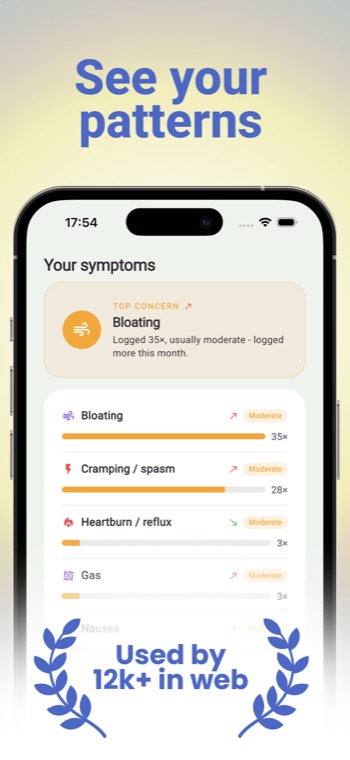
You can link each entry to what you ate, how stressed you felt, how you slept, and any symptoms like bloating or cramping. Over time, the app surfaces patterns you would never spot on your own, such as noticing that your type 6 days almost always follow a high-fat takeaway, or that your type 2 mornings cluster around poor sleep nights.
If you do end up seeing a doctor about a persistent change, having a week or two of logged data to share is genuinely useful. It turns a vague sense of feeling off into something concrete and actionable. Learn what triggers your bloating or constipation by building up your personal picture over time.
Your gut is doing something remarkable every single day. A little attention to what it is telling you, without tipping into anxiety about it, is one of the kindest things you can do for your long-term health.
Frequently asked questions
Is it normal for my poop to change color or consistency day to day?
Yes, completely. What you eat, how much you drink, your stress levels, and your sleep all influence stool color and consistency. A green stool after a spinach-heavy day or a slightly looser stool after a rich meal is nothing to worry about. It is persistent changes lasting more than a couple of weeks that are worth paying attention to.
What does it mean if my stool is always loose or always hard?
Consistently loose stools (Bristol types 6 to 7) or consistently hard stools (types 1 to 2) suggest your gut transit time is either too fast or too slow. Common causes include low fiber intake, dehydration, stress, or an underlying gut condition like IBS. HealthPartners' healthy poop guide has a clear breakdown of what each end of the scale might mean. If it has been going on for more than a few weeks, it is worth mentioning to your doctor.
How often should I poop to be considered healthy?
Anywhere from three times a week to three times a day is considered within the normal range by most gastroenterologists. What matters more than the number is whether your pattern is consistent and comfortable for you. Straining, pain, or a persistent feeling of incomplete emptying are more meaningful signals than frequency alone.
Can I tell if something is wrong with my digestion just by looking at my poop?
Sometimes, yes. Stool appearance can flag things like dehydration (hard, type 1 to 2), fat malabsorption (greasy and floating), GI bleeding (red or black), or bile flow problems (pale or gray). Visible stool changes are a prompt to pay attention, not a diagnosis. WebMD's Bristol stool scale explainer is a good starting point for understanding what different appearances might mean. For anything persistent or alarming, please see a doctor.


Find your own gut patterns
Belly Care turns a few honest minutes a day into a clear picture of what's linked to how you feel — bloating, IBS, energy and mood.
Download on the App StoreSources
- Bristol stool chart - Cleveland Clinic
- Bristol stool chart - GoodRx
- 5 things your poop can tell you about your health - Johns Hopkins Medicine
- What healthy bowel movements look like - MedStar Health
- Types of poop - Healthline
- Bristol stool chart - Verywell Health
- Types of poop: appearance, color, consistency and time - Carolina Digestive
- Healthy poop chart - HealthPartners
- Poop chart: Bristol stool scale - WebMD
Belly Care helps you observe patterns and build healthy habits — it doesn't diagnose or treat any condition. The patterns it surfaces are starting points to explore, not medical advice. For persistent symptoms, please see a doctor.
Frequently asked questions
Is it normal for my poop to change color or consistency day to day?
Yes, completely. Diet, hydration, stress, and sleep all influence stool color and consistency from one day to the next. A green stool after a spinach-heavy day or a slightly looser stool after a rich meal is nothing to worry about. It is persistent changes lasting more than a couple of weeks that are worth paying attention to.
What does it mean if my stool is always loose or always hard?
Consistently loose stools (Bristol types 6 to 7) or consistently hard stools (types 1 to 2) suggest your gut transit time is either too fast or too slow. Common causes include low fiber intake, dehydration, stress, or an underlying condition like IBS. If it has been going on for more than a few weeks, it is worth mentioning to your doctor.
How often should I poop to be considered healthy?
Anywhere from three times a week to three times a day is considered within the normal range by most gastroenterologists. What matters more than the number is whether your pattern is consistent and comfortable for you. Straining, pain, or a persistent feeling of incomplete emptying are more meaningful signals than frequency alone.
Can I tell if something is wrong with my digestion just by looking at my poop?
Sometimes, yes. Stool appearance can flag things like dehydration (hard, type 1 to 2), fat malabsorption (greasy and floating), GI bleeding (red or black), or bile flow problems (pale or gray). These are prompts to pay attention, not a diagnosis. For anything persistent or alarming, please see a doctor.