 Belly Care
Feeling extra gassy lately? You're not alone, and in most cases it is not a sign something is seriously wrong. According to the NIDDK, passing gas up to 25 times a day is completely normal. The real question is not whether you have gas but whether something has shifted recently to make it feel like more than usual.
That shift is almost always traceable to something specific: a new food, a change in routine, or even a stressful week. Once you start noticing patterns, you have something practical to work with.
What "extra gassy" really means
Your gut produces gas in two main ways: swallowed air and bacterial fermentation of undigested carbohydrates in your colon. Johns Hopkins Medicine explains that both are a completely normal part of digestion, not a sign your gut is broken.
Healthy adults produce roughly 0.5 to 1.5 litres of intestinal gas every day. Most of it passes without you noticing. When it starts feeling like too much, something has usually changed, and that is worth paying attention to.
Gas symptoms do not always mean you are producing more gas than usual. Research shows that how sensitive your gut is to gas, and how efficiently it moves gas along, matters just as much as the volume itself. Sometimes the issue is less about production and more about how your body is handling things on a given day.
Common patterns that trigger gas
High-fiber foods, especially eaten suddenly
Beans, lentils, broccoli, cabbage, Brussels sprouts, and whole grains are among the most nutritious foods you can eat. They are also among the biggest gas producers, because the bacteria in your colon ferment the fibers you cannot digest yourself.
This is not necessarily a bad thing. Gut Microbiota for Health notes that gas from fiber fermentation is a sign your microbiota is doing its job. The problem tends to arise when you jump from eating very little fiber to a lot of it very quickly. Increasing fiber gradually gives your gut bacteria time to adapt.
Eating fast or while stressed
When you eat quickly, you swallow more air than you realise. That air has to go somewhere, and it usually exits as burping or flatulence. Cedars-Sinai highlights that chewing gum, drinking through straws, and eating while anxious all have the same effect.
Stress also affects gut motility, meaning food and gas can move more slowly through your system, which makes bloating feel worse. More on that below.
Carbonated drinks and artificial sweeteners
Fizzy drinks introduce carbon dioxide directly into your digestive tract. Artificial sweeteners such as sorbitol and xylitol, found in sugar-free gum, mints, and some diet foods, are poorly absorbed and get fermented by gut bacteria, producing extra gas in the process.
Dairy, if you are lactose sensitive
Lactose intolerance is more common than many people realise. If your body does not produce enough lactase enzyme, the lactose in milk, soft cheese, and ice cream passes undigested into your colon, where bacteria ferment it and produce gas. It is worth noting whether your symptoms tend to follow dairy-heavy meals specifically.
Fatty or greasy meals
Fat slows gastric emptying, meaning food sits in your stomach longer. That delay can contribute to bloating and gas after eating, especially after a large meal. Fat itself does not produce gas directly; it simply slows the whole process down.
Constipation and slow transit
Gas and constipation are closely linked. When stool moves slowly through your colon, gas gets trapped behind it and builds up. Research on gut microbiota and gas production has found that methane-producing bacteria are associated with slower transit and constipation. If you are backed up, you will often feel more gassy too.
How to track your gas patterns
The most useful thing you can do right now is start logging. Not obsessively, just enough to spot connections. Most gas symptoms appear one to three hours after eating, so you are looking for patterns between meals and symptoms rather than an immediate cause and effect.
Note what you ate, roughly how fast you ate it, your stress level that day, and whether you experienced any bloating or gas. After a week or two, patterns often become surprisingly clear. Belly Care makes this straightforward with a simple meal and symptom log designed to help you find your personal triggers without building a spreadsheet.
It is also worth tracking your bowel movements. The Bristol Stool Scale is a simple tool that helps you notice whether your stools are too hard, too loose, or just right, and that information often explains a lot about your gas. Belly Care includes a Bristol scale tracker so you can connect the dots between what is happening at both ends.
Do not forget to log stress. Anxiety and digestive discomfort have a well-documented relationship through the gut-brain axis, and many people find their gas spikes on high-stress days even when their diet has not changed.
Gentle changes that may help
Slow down at mealtimes
This one sounds almost too simple, but it genuinely makes a difference. Eating slowly reduces the amount of air you swallow and gives your digestive system time to signal fullness properly. Try putting your fork down between bites, or aiming for at least 20 minutes per meal.
Add fiber gradually, not all at once
If you are trying to eat more plants, that is great. Just ease into it. Adding roughly 3 to 5 grams of fiber per week, rather than overhauling your diet overnight, gives your gut bacteria time to adapt. ISAPP's overview of gut microbiota and intestinal gas explains how your microbiome responds to these gradual changes.
Stay hydrated
Water helps keep things moving through your digestive tract, which reduces the chance of gas getting trapped. It also softens stool, which matters if constipation is part of your picture. Aim for consistent hydration throughout the day rather than large amounts all at once.
Move your body after meals
Even a 10-minute walk after eating can help stimulate gut motility and move gas along. You do not need intense exercise, just gentle movement. Many people find this one of the most immediately effective changes they can make.
Temporarily limit carbonated drinks and artificial sweeteners
Try cutting these out for a week or two and see whether it makes a difference. This is one of the easier experiments to run because the change is specific and the timeline is short. If your symptoms improve, you have found a useful lever.
Work on stress management
Even five minutes of slow breathing or gentle stretching before a meal can shift your nervous system into a more relaxed state, which supports better digestion. It is not a cure, but many people find it genuinely helpful as part of a broader approach.
If you want a structured way to try all of this, Belly Care's tracking tools let you log meals, symptoms, stress, and movement in one place so you can see what is actually working over time.
Can stress really make you gassy?
Yes, and it is not just in your head. The gut and brain communicate constantly through the vagus nerve and the enteric nervous system. When you are anxious or stressed, your gut motility can slow down or become irregular, which affects how gas moves through your system.
Gastroenterology specialists note that functional gut disorders like IBS, which are strongly linked to stress and anxiety, are among the most common reasons people experience troublesome gas and bloating without any structural problem showing up on tests. If stress seems to be a consistent factor for you, that is worth exploring with your GP.
What foods cause the most gas?
The biggest culprits are foods high in FODMAPs (fermentable carbohydrates that your small intestine does not fully absorb) and foods that introduce air or slow digestion. Better Health Victoria's guide to flatulence lists the most common ones:
- Beans and lentils
- Cabbage, broccoli, cauliflower, and Brussels sprouts
- Onions and garlic
- Wheat bran and high-fiber cereals
- Lactose-containing dairy (for those who are sensitive)
- Fructose-rich foods such as apples, pears, and fruit juice
- Sorbitol and other sugar alcohols in sugar-free products
- Carbonated drinks
That list can look alarming, but the goal is not to avoid all of these forever. Many of them are genuinely good for your gut in the long run. The aim is to identify your specific triggers, which is where a food diary really earns its keep.
When to see a doctor
Most extra gas is harmless and responds well to the changes above. It is worth seeing your GP if your symptoms have lasted more than two weeks without improvement, or if gas is accompanied by any of the following:
- Persistent or severe abdominal pain
- Bloating that does not ease over the course of a day
- Unexplained changes in your bowel habits
- Blood in your stool
- Unintentional weight loss
- Nausea or vomiting alongside gas symptoms
Mayo Clinic recommends seeking medical advice if gas is frequent, painful, or socially limiting and does not improve with dietary changes. These symptoms can sometimes point to conditions such as coeliac disease, IBS, or lactose intolerance that benefit from proper diagnosis and support.
You know your body. If something feels off beyond everyday digestive noise, trust that instinct and get it checked out.


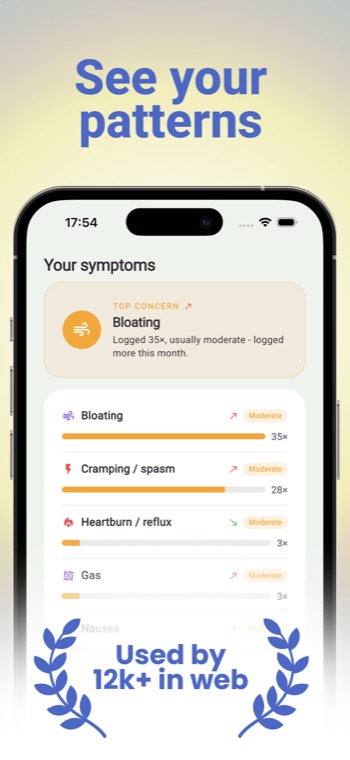
Find your own gut patterns
Belly Care turns a few honest minutes a day into a clear picture of what's linked to how you feel — bloating, IBS, energy and mood.
Download on the App StoreSources
- ISAPP: The science on gut microbiota and intestinal gas
- Gut Microbiota for Health: Don't be ashamed of passing gas
- Johns Hopkins Medicine: Gas in the digestive tract
- Cedars-Sinai: Gas in the digestive tract
- NIDDK: Gas in the digestive tract - symptoms and causes
- Mayo Clinic: Intestinal gas - causes
- Gastroenterology Consultants: Gas and bloating
- Better Health Victoria: Flatulence
- ScienceDirect: Gut microbiota and gas production research
- PMC: Intestinal gas and gut sensitivity
Belly Care helps you observe patterns and build healthy habits — it doesn't diagnose or treat any condition. The patterns it surfaces are starting points to explore, not medical advice. For persistent symptoms, please see a doctor.
Frequently asked questions
Why do I suddenly feel more gassy than usual?
A sudden increase in gas usually points to a recent change, such as eating more high-fiber foods, eating faster, increased stress, a new medication, or a shift in your gut bacteria. Constipation can also cause gas to build up. Try logging your meals and symptoms for a week or two to spot what has changed.
What foods cause the most gas?
The biggest culprits are beans, lentils, cruciferous vegetables (broccoli, cabbage, Brussels sprouts), onions, garlic, wheat bran, lactose-containing dairy (if you are sensitive), fructose-rich fruits, sugar-free products containing sorbitol, and carbonated drinks. Your personal triggers may differ, so a food diary is the best way to find out.
Can stress really make you gassy?
Yes. Stress affects gut motility through the gut-brain axis, which can slow or disrupt how gas moves through your digestive tract. Many people find their gas and bloating worsen on high-stress days even when their diet has not changed. Breathing exercises or gentle movement before meals may help.
How long does it take to notice a difference after changing my diet?
Most people notice some improvement within one to two weeks of making consistent changes, such as eating more slowly, cutting carbonated drinks, or gradually increasing fiber. However, your gut microbiome can take four to six weeks to meaningfully adapt to dietary shifts, so patience and consistency matter more than perfection.