 Belly Care
Your gut microbiota is the vast community of trillions of bacteria, fungi, viruses and other microorganisms living mostly in your colon. It weighs roughly 1 to 2 kg, influences everything from digestion to mood, and is as unique to you as a fingerprint.
Understanding what your microbiota does, and how to support it, is one of the most practical things you can do for your overall health. This guide covers the science in plain English, separates solid evidence from hype, and gives you real steps to explore your own patterns.
What exactly is gut microbiota?
The term "gut microbiota" refers to the entire community of microorganisms living in your digestive tract, with the colon being the most densely populated area. We are talking hundreds to thousands of different bacterial species, plus fungi, archaea and viruses, all coexisting in a surprisingly organised ecosystem.
According to research published in the Journal of Nutrition, this community is highly individualised. The microbes most unique to you also tend to be the most stable over time, which is why scientists increasingly describe your microbiota as a kind of biological fingerprint.
Most of these organisms are harmless. Many are genuinely essential, helping you digest food, produce vitamins, train your immune system and protect against harmful pathogens. The idea that bacteria are simply germs to be eliminated is a long way from how modern science sees them.
You might also see the word "microbiome" used interchangeably. Strictly speaking, the microbiota refers to the organisms themselves, while the microbiome includes their collective genetic material too. In everyday conversation, the two terms are often used to mean the same thing.
How your microbiota affects digestion
Your body cannot break down dietary fibre on its own. Your gut bacteria do that job for you, fermenting plant fibres in the colon and producing compounds called short-chain fatty acids (SCFAs), including butyrate, propionate and acetate.
SCFAs matter more than most people realise. Butyrate, for example, is the primary fuel source for the cells lining your colon, helping to keep the gut wall strong and reducing inflammation. Researchers at Lund University highlight SCFAs and other microbial metabolites as key mediators between what you eat and how your body functions at a cellular level.
Your microbiota also helps you absorb minerals like calcium and magnesium more efficiently, and it influences how quickly food moves through your gut. If things feel sluggish or unpredictable, your microbial balance may be part of the picture, though it is rarely the only factor.

The gut-brain connection: more than digestion
Here is something that surprises most people: around 90% of your body's serotonin, a neurotransmitter closely linked to mood and sleep, is produced in the gut. Microbial activity directly influences how much gets made.
Your gut and brain are in constant two-way communication via the vagus nerve, a long nerve running from your brainstem all the way down to your abdomen. This pathway is often called the gut-brain axis. Emerging research suggests your microbiota plays an active role in it, producing neurotransmitters like GABA and sending chemical signals that may influence your stress response, anxiety levels and sleep quality.
People with ADHD, schizophrenia and neurodegenerative conditions like Alzheimer's disease have been found to have different gut microbiota profiles compared with healthy controls. Causality is not fully established yet, but the associations are consistent enough that researchers are taking them seriously.
What this means practically is that patterns in how you feel, including your energy, mood and sleep, can sometimes connect to what you have eaten. Tracking those patterns over time is one of the most useful things you can do.
What makes a "healthy" microbiota?
One of the most important things modern science has clarified is that there is no single perfect microbiota. A landmark Stanford Medicine study that followed 86 people for up to six years found no universal healthy microbiome pattern shared across all participants. Instead, each person had a highly personal microbial profile shaped by their genetics, diet, immune system and environment.
That said, researchers do point to a few broad markers that tend to go hand in hand with good health.
- Diversity: having many different species, not just a few dominant ones, is generally considered a good sign. Low diversity is consistently linked with obesity, type 2 diabetes and inflammatory bowel disease.
- Resilience: a healthy microbiota can bounce back after a course of antibiotics or a bout of illness, rather than staying disrupted for months.
- Stability: your microbiota should be relatively consistent day to day, with natural variation around a personal baseline. People with type 2 diabetes, for example, tend to show a less stable, less diverse microbiome over time.
- Function over composition: experts increasingly argue that what your microbiota does matters more than which exact species are present. If it is producing SCFAs, supporting your immune system and not causing symptoms, it is likely doing its job.
It is also worth knowing that around 80% of your immune system lives in and around your gut. The microbiota and your immune cells are in constant dialogue, which is one reason gut health has such wide-ranging effects on the rest of your body.

Microbiota, probiotics and fibre: how they work together
Probiotics are live beneficial bacteria found in fermented foods like yogurt, kefir, kimchi and sauerkraut, or in supplement form. Some people find them helpful, particularly after antibiotics or during specific digestive complaints. But the evidence for over-the-counter probiotic supplements in otherwise healthy people is more mixed than the marketing suggests.
Recent research comparing prebiotic whole-food interventions with probiotic supplements found that the prebiotic approach produced much larger shifts in beneficial bacteria. The probiotic intervention mostly introduced the specific strain being tested, with minimal broader change. That is a meaningful distinction.
Prebiotics are the fibres and plant compounds that feed your existing microbiota. Think of probiotics as adding new residents to a neighbourhood, and prebiotics as improving the neighbourhood so the good residents already there can thrive. Most researchers now lean toward prebiotics and dietary variety as more powerful tools for most people.
The diversity of plant foods you eat matters enormously here. Different plant fibres feed different bacterial species, which is why eating a wide range of vegetables, fruits, legumes, wholegrains, nuts and seeds tends to support microbiome diversity better than any single supplement.
The UNC Microbiome Core is actively researching how specific fibres and prebiotic substrates can promote healthier ageing and reduce age-associated disease risk, which gives you a sense of how seriously the scientific community takes dietary fibre as a microbiome tool.
How to explore your own microbiota patterns
You do not need an expensive microbiome test to start learning about your gut. Experts caution that commercial gut health scores do not yet have validated, universally accepted metrics that reliably translate into individual treatment plans. What you can do is pay attention to your own patterns.
Try logging your meals, symptoms, energy and mood for seven days using Belly Care. You might notice that certain high-fibre foods cause bloating at first, that your energy dips after particular meals, or that stress correlates with digestive discomfort. These are patterns worth exploring.
Small, consistent changes tend to work better than dramatic overhauls. Adding one or two new plant foods per week, gradually increasing your fibre intake, and eating more fermented foods are all approaches that research suggests can shift microbiome composition within weeks. The catch is that if you revert to old habits, your microbiota tends to drift back toward its prior baseline, so consistency matters more than intensity.
Belly Care's Bristol Stool Scale tracker can also help you notice changes in transit time as you adjust your diet, which is one of the clearest signals that your microbiota is responding.
When to see a doctor
Most digestive variation is normal, and your microbiota naturally fluctuates with diet, stress and illness. But some symptoms deserve professional attention rather than self-experimentation.
- Persistent bloating, constipation or diarrhoea lasting more than a few weeks
- Unexplained weight loss
- Blood in your stool
- Severe or worsening abdominal pain
- Symptoms that significantly affect your daily life
A GP or registered dietitian can order appropriate tests, rule out conditions like inflammatory bowel disease or coeliac disease, and give you personalised guidance. Emerging research into the microbiota's role in systemic disease is exciting, but it does not replace clinical assessment for persistent or worrying symptoms. Please do get checked out if something does not feel right.


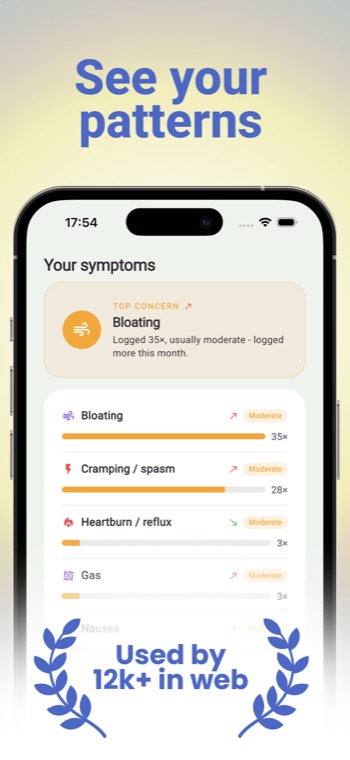
Find your own gut patterns
Belly Care turns a few honest minutes a day into a clear picture of what's linked to how you feel — bloating, IBS, energy and mood.
Download on the App StoreSources
- Key takeaways from the latest research on gut bacteria - Lund University
- Microbiome - News Medical
- Personal microbiome study - Stanford Medicine
- Key advances in gut microbiome research during 2025 - Gut Microbiota for Health
- Gut microbiota research - UNC Microbiome Core
- Gut microbiota composition and human health - PMC
- Gut microbiota and metabolic health - PMC
- Gut microbiota and systemic disease - Frontiers in Cellular and Infection Microbiology
Belly Care helps you observe patterns and build healthy habits — it doesn't diagnose or treat any condition. The patterns it surfaces are starting points to explore, not medical advice. For persistent symptoms, please see a doctor.
Frequently asked questions
Can I change my gut microbiota quickly?
Diet can shift your microbiota composition within days to weeks, and meaningful changes from prebiotic-rich, plant-diverse eating can show up within 12 to 18 weeks in research studies. The tricky part is that your microbiota tends to drift back toward its personal baseline if you return to old habits, so gradual, sustainable changes tend to work better than short-term cleanses or dramatic overhauls.
Do I need probiotics if I eat enough fibre?
Probably not as a daily essential. Recent research suggests that prebiotic fibre, the kind that feeds your existing gut bacteria, produces larger, broader shifts in beneficial microbes than most probiotic supplements do. Fermented foods like yogurt, kefir and kimchi offer a natural source of beneficial bacteria alongside other nutrients. Probiotic supplements may be worth considering after antibiotics or for specific conditions, but for most healthy people a varied, fibre-rich diet is the stronger foundation.
How do I know if my microbiota is out of balance?
There is no simple test that gives a reliable answer yet. Commercial microbiome tests exist, but experts caution that we do not have universally validated metrics to translate those results into clear action plans. Practically speaking, persistent bloating, irregular bowel habits, frequent infections, low energy or mood changes can all be patterns worth exploring. Logging meals and symptoms for a week or two can help you spot connections. If symptoms are persistent or severe, see a doctor rather than relying on self-assessment.
What's the difference between microbiota and microbiome?
Microbiota refers to the actual community of microorganisms living in your gut, the bacteria, fungi, viruses and archaea themselves. Microbiome technically refers to their collective genetic material and the broader environment they inhabit. In practice, most people and many scientists use the two terms interchangeably, and either way they are referring to the same general concept.