 Belly Care
Probiotics are live microorganisms, usually specific bacteria or yeasts, that may benefit your health when you consume enough of them. The internationally accepted definition, developed by FAO/WHO and refined by the International Scientific Association for Probiotics and Prebiotics (ISAPP), puts it plainly: "live microorganisms that, when administered in adequate amounts, confer a health benefit on the host."
You will find them naturally in fermented foods like yogurt and kimchi, and in concentrated form in supplements. Whether you are curious about getting probiotics through food or considering a specific supplement, it helps to understand what you are actually working with before you dive in.
What probiotics actually are
Probiotics are living microbes, not just any bacteria, but specific, identified strains that have been tested and shown to do something useful in the human body. Common examples include Lactobacillus rhamnosus GG, various Bifidobacterium species, and the yeast Saccharomyces boulardii.
It is worth knowing that probiotics are different from prebiotics. Prebiotics are fibrous compounds that feed the bacteria already living in your gut, while probiotics are the live microbes themselves. Think of prebiotics as fertiliser and probiotics as the seeds.
Strain matters enormously. Different strains can do completely different things, and a benefit shown for one strain cannot automatically be assumed for another. A product is only genuinely a probiotic if its exact strains have been tested in humans at a defined dose and shown to help.
How probiotics may help your gut
Probiotics work through several mechanisms: reinforcing the gut barrier, supporting immune function, producing vitamins, and crowding out less helpful microbes. As the NIH Office of Dietary Supplements explains, these effects are strain-specific and can extend beyond the gut to the immune and nervous systems.
One of the clearest use cases is after a course of antibiotics. Antibiotics can disrupt the balance of gut bacteria, and some people find probiotics help ease the digestive fallout. A meta-analysis of 31 studies involving over 8,600 patients found moderate certainty that probiotics reduce the risk of Clostridioides difficile-associated diarrhea in people taking antibiotics.
For everyday digestive issues like bloating, loose stools, or constipation, the picture is more personal. A meta-analysis of 23 trials found probiotics reduced the risk of persistent IBS symptoms by around 21% compared to placebo, which is meaningful but modest. Some people notice a real difference; others do not. Your gut microbiome is unique to you, which is why tracking your own patterns matters more than any generic claim.
Probiotics in food vs. supplements
Fermented foods are the most natural way to get live cultures into your diet. Yogurt with live cultures, kefir, sauerkraut, kimchi, miso, and tempeh all contain naturally occurring probiotic bacteria. These foods also bring fibre, vitamins, and other nutrients your gut appreciates alongside the live microbes.
Supplements offer concentrated, specific strains, which can be useful if you are targeting a particular issue or if fermented foods do not suit your diet. The catch is that not all supplements survive the journey through stomach acid to reach your intestines intact. Look for products that name the strain, state the CFU (colony-forming unit) count, and have clinical evidence behind them.
If you are just starting out, food is a gentle place to begin. Add a small pot of live-culture yogurt or a spoonful of sauerkraut to your meals and see how you feel. Supplements are a reasonable next step if food sources are not practical for you.
What the research actually shows
The evidence for probiotics is genuinely promising in some areas and still evolving in others. According to the NIH's National Center for Complementary and Integrative Health, the strongest evidence sits around acute infectious diarrhea, antibiotic-associated diarrhea, and reducing the risk of necrotising enterocolitis in preterm infants.
For IBS, the data is encouraging but mixed. For metabolic health, including cholesterol and blood sugar, a 2024 review in Frontiers in Microbiology highlights promising signals around weight regulation and insulin sensitivity, while stressing the data is still evolving and very strain-specific.
For eczema and allergies, some meta-analyses show small statistical improvements, but experts generally consider these effects too modest to recommend probiotics as a routine treatment. The honest summary: probiotics are not a magic fix, but for certain situations and certain people, they may genuinely help.
Quality also varies considerably between products. Harvard Health notes that many commercial claims outpace the actual evidence. Choosing a product with named strains and published research behind it gives you a much better starting point.
Research is also expanding into newer areas. A 2024 study published in Scientific Reports adds to a growing body of work exploring how specific probiotic strains interact with host physiology, reinforcing the message that strain selection and study design both matter when interpreting results.
How to explore probiotics for your gut
The most useful thing you can do is treat yourself as an experiment of one. Make one change at a time, whether that is adding a fermented food daily or trying a specific supplement, so you can actually see what is affecting you.
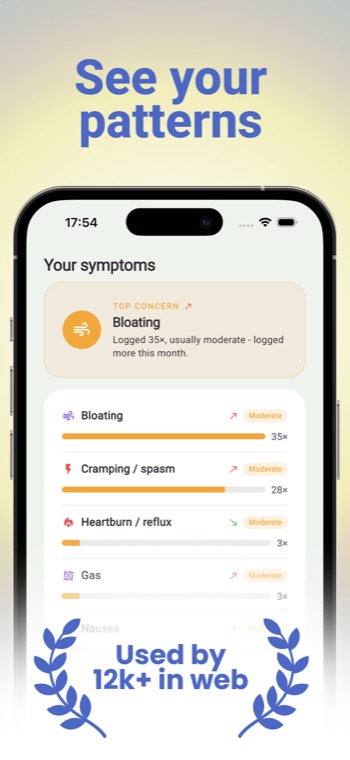
Give it two to four weeks. Gut changes do not happen overnight, and a few days is not long enough to draw conclusions. Logging what you eat and how you feel each day makes patterns much easier to spot. Belly Care lets you track meals, symptoms, and stool type using the Bristol Stool Scale, so you can see whether things are actually shifting over time rather than relying on memory.
If you want a meaningful baseline, track your gut patterns in Belly Care for a week before making any changes. That gives you real data to compare against, which makes your self-experiment far more useful.
And if symptoms are persistent, painful, or getting worse, please see your doctor. Probiotics are a supportive tool, not a substitute for medical care.
Common questions about probiotics
Do I need probiotics if my gut feels fine?
Probably not. A varied diet rich in fibre, fermented foods, and plants generally does a good job of supporting a healthy gut microbiome without supplements. Probiotics are more likely to be useful when something has disrupted your gut, such as antibiotics, illness, or a period of poor diet.
Are probiotics safe?
For most healthy adults, yes. Side effects are usually mild and temporary, such as a little extra gas or bloating in the first few days. That said, if you are immunocompromised, seriously ill, or have a central venous catheter, check with your doctor first. The same applies if you are considering giving probiotics to a very young baby outside of a medically supervised context.
How do I know if probiotics are working?
This is where tracking really earns its keep. Subjective feelings are hard to remember accurately over weeks. Logging your symptoms, energy, bloating, and bowel habits in an app like Belly Care gives you actual data to look back on, rather than a vague sense of feeling a bit better.
What about next-generation probiotics?
You may see mentions of newer strains like Akkermansia muciniphila or Faecalibacterium prausnitzii in the press. Research into these next-generation probiotics is genuinely exciting, but most are still in early or preclinical stages. They are worth watching, but the clinical evidence is not yet strong enough to make firm recommendations.


Find your own gut patterns
Belly Care turns a few honest minutes a day into a clear picture of what's linked to how you feel — bloating, IBS, energy and mood.
Download on the App StoreSources
- Probiotics - Health Professional Fact Sheet, NIH Office of Dietary Supplements
- Probiotics - ISAPP (International Scientific Association for Probiotics and Prebiotics)
- The benefits of probiotics - Harvard Health
- Probiotics and metabolic health - Frontiers in Microbiology 2024
- Probiotics: Usefulness and Safety - NCCIH (NIH)
- Probiotic strains and host physiology - Scientific Reports 2024
- Next-generation probiotics research - Journal of Agricultural and Food Chemistry
Belly Care helps you observe patterns and build healthy habits — it doesn't diagnose or treat any condition. The patterns it surfaces are starting points to explore, not medical advice. For persistent symptoms, please see a doctor.
Frequently asked questions
What's the difference between probiotics and prebiotics?
Probiotics are live microorganisms, specific bacteria or yeasts, that may benefit your health when you consume enough of them. Prebiotics are types of fibre that feed the bacteria already living in your gut. Think of prebiotics as fertiliser and probiotics as the seeds. Both matter for a healthy microbiome, and some foods and supplements combine the two.
Do I really need probiotic supplements, or is fermented food enough?
For most people, fermented foods like yogurt with live cultures, kefir, kimchi, sauerkraut, and miso are a great starting point. They deliver live cultures alongside fibre and other nutrients. Supplements can be useful if you are targeting a specific issue or if fermented foods do not suit your diet, but they are not essential for everyone. Starting with food is a gentle, practical approach.
How long does it take to feel the effects of probiotics?
It varies from person to person and depends on what you are hoping to address. Most research trials run for two to twelve weeks, so it is reasonable to give any change at least two to four weeks before drawing conclusions. Tracking your symptoms daily, rather than relying on memory, makes it much easier to notice gradual shifts.
Are all probiotic strains the same?
Not at all. This is one of the most important things to understand about probiotics. Different strains can have completely different effects, and a benefit shown for one strain, such as Lactobacillus rhamnosus GG for antibiotic-associated diarrhea, cannot be assumed for a different Lactobacillus strain or a different brand. Always look for products that name their specific strains and have clinical evidence behind them.