 Belly Care
If you have been putting up with bloating, fatigue, or unpredictable digestion for years, a food intolerance could be part of the picture. The good news is you do not need to wait for a clinic appointment to start figuring it out. Careful tracking at home is genuinely one of the most effective first steps you can take.
Food intolerances are non-immune reactions that mainly affect your digestive system. They are not the same as allergies, they are not life-threatening, and they are surprisingly common, though exact numbers are hard to pin down because so many people never receive a formal diagnosis.
Why checking for food intolerance matters
A food intolerance is not a mild version of a food allergy. They are completely different things. Allergies involve your immune system and can cause rapid, serious reactions such as skin swelling, breathing difficulties, or anaphylaxis. Intolerances, on the other hand, are usually about how your body digests or processes certain foods, and symptoms tend to be delayed and digestive in nature.
That delay is exactly why so many people miss the connection. If you feel bloated three hours after lunch, you are unlikely to blame what you ate. Over time, you start to assume that feeling rough after meals is just normal for you. It really does not have to be.
Spotting your own patterns through tracking can be faster and cheaper than waiting for clinical tests. It also gives you something concrete to bring to a GP or dietitian if you need professional input later on.
The tracking method: your best tool
There is no single validated blood test that can diagnose food intolerance. Despite what some commercial intolerance panels claim, expert reviews consistently show that IgG-based tests lack evidence and are not recommended by professional bodies. The real gold standard is a detailed food diary combined with an elimination and reintroduction approach.
Start by logging everything you eat and drink, and be specific. "Oat milk latte" is more useful than "coffee". "Sourdough toast with butter and soft cheese" is more useful than "breakfast". The detail matters because sometimes it is a combination of foods, not just one ingredient, that tips you over your personal threshold.
Alongside your meals, record your symptoms daily. Bloating, gas, loose stools, constipation, fatigue, headaches, and skin changes are all worth noting. Record the timing too, because intolerance symptoms are often dose-dependent and delayed, sometimes appearing hours after eating the trigger food.
Do not forget to log mood, sleep, and stress levels. These all affect digestion in real ways, and accounting for them makes your food data much more reliable.
After seven days, look for clusters. Which foods appear consistently before your worst symptom days? Belly Care automates exactly this process, linking your meal logs to your daily Bristol scale entries so you can see patterns you would easily miss in a handwritten notebook.
Common food intolerances to watch for
Lactose
Lactose intolerance happens when your body does not produce enough lactase, the enzyme needed to break down the sugar in dairy. Undigested lactose ferments in your colon, causing gas, bloating, and diarrhoea, usually within 30 minutes to two hours of eating dairy products, soft cheeses, or cream.
FODMAPs
FODMAPs are a group of fermentable carbohydrates found in foods like onions, garlic, wheat, apples, and certain legumes. In people with sensitive guts, they are poorly absorbed and cause luminal distension as they ferment and create gas. This is one of the most well-researched triggers for IBS-type symptoms. Exploring common FODMAP triggers can give you a clearer picture of which foods are worth watching.
Gluten and wheat
Non-coeliac wheat sensitivity is real, but it is also genuinely complicated. The science is still debating whether symptoms come from gluten itself, other wheat proteins called amylase-trypsin inhibitors, or the FODMAPs in wheat. If you suspect wheat is a problem, rule out coeliac disease with your GP first. Cutting gluten before testing can make coeliac disease harder to diagnose.
Histamine
Some people find that aged cheeses, cured meats, fermented foods, and red wine trigger headaches, flushing, or digestive discomfort. Histamine intolerance is thought to involve a reduced ability to break down histamine in food, though the evidence is still limited and the mechanism is debated. It is worth tracking if those specific foods keep appearing before your symptoms.
Fibre overload
Even healthy foods can cause problems if you increase fibre too quickly. Beans, lentils, brassicas, and wholegrains are all nutritious, but ramping them up fast can cause significant gas and cramping. This is not really an intolerance. It is your gut microbiome adjusting. Slow and steady wins here.
How to spot patterns in your data
Timing is your first clue. Symptoms within 30 minutes to two hours of eating point more directly at a specific food. Reactions that take four to six hours, or longer, are harder to trace but do show up when you track consistently over a week or more.
Check for frequency next. Does bloating happen every time you eat a certain food, or only sometimes? Intolerances are often dose-dependent, meaning a small amount might be fine but a larger portion crosses your personal threshold. That is actually useful information. It means strict lifelong avoidance is not always necessary.
Think about combinations too. Bread, butter, and soft cheese eaten together might cause symptoms that none of those foods would cause individually. This is especially relevant with FODMAPs, where the total load across a meal matters as much as any single ingredient.
Once you spot a pattern, try removing the suspected food for three to five days, then reintroduce it and observe what happens. If symptoms return on reintroduction, that is meaningful data. Belly Care's meal and symptom tracking makes this reintroduction phase much easier to interpret, because you can see your Bristol scale scores and symptom notes side by side with what you ate.
When to see a doctor
Home tracking is a sensible first step, but it has limits. If symptoms persist despite avoiding your suspected triggers, talk to your GP. They can arrange hydrogen breath tests for lactose or fructose malabsorption, and a dietitian can help you interpret your data without accidentally cutting out too many nutrients.
If you are avoiding multiple food groups, please get professional support. Restrictive diets can reduce your intake of fibre, calcium, and B vitamins if they are not well planned, and that creates new problems.
One important distinction: if you ever experience swelling, difficulty breathing, hives, or any rapid systemic reaction after eating, that is a potential allergy, not an intolerance. Food allergies involve the immune system and can escalate to anaphylaxis. Do not track and wait. Seek emergency care immediately and follow up with an allergist.
A GP can also help rule out other conditions. Persistent digestive symptoms can sometimes point to coeliac disease, inflammatory bowel disease, or other issues that need proper investigation. Tracking is a great starting point, but it is not a substitute for medical assessment when symptoms are severe or ongoing.
Practical tips to get started today
- Start now, not next Monday. Even three days of honest data is more useful than a perfect plan you have not started yet.
- Log everything. The biscuit with your tea, the glass of wine, the handful of crisps. All of it counts. Gaps in your log make patterns invisible.
- Use photos if writing feels like too much effort. A quick picture of your plate takes five seconds and captures more detail than you would write down.
- Track your Bristol scale score daily. Stool consistency is one of the most informative signals your gut gives you, and it is easy to overlook. Belly Care uses the Bristol scale as a core part of its tracking system for exactly this reason.
- Eliminate one food at a time. Cutting multiple things at once makes it impossible to know which change made the difference. Go one at a time, give it a week, and reintroduce before moving on.
- Share your logs with a healthcare provider if you need professional input. A week of detailed data is far more useful to a GP or dietitian than a vague description of feeling bad after eating.
- Be patient with yourself. Some patterns take two to three weeks to become clear, especially with delayed reactions. Consistency matters more than perfection.
Checking for food intolerance at home is not about self-diagnosing or cutting out entire food groups on a hunch. It is about building enough awareness to have an informed conversation, with yourself, and eventually with a healthcare professional if you need one. You know your body better than anyone. Good tracking just helps you listen to it more clearly.
Frequently asked questions
How long does it take to check for food intolerance?
Most people start to see meaningful patterns after seven to fourteen days of consistent tracking. Delayed reactions can take longer to connect to specific foods, so two to three weeks gives a more reliable picture. The elimination and reintroduction phase adds another one to two weeks per suspected food.
Can I check for food intolerance without a blood test?
Yes, and for most intolerances a food diary combined with elimination and reintroduction is actually more reliable than commercial blood tests. IgG-based intolerance panels lack scientific backing and are not recommended by expert bodies. Hydrogen breath tests, available through your GP, are useful for confirming lactose or fructose malabsorption specifically.
What is the difference between food intolerance and food allergy?
A food allergy is an immune system reaction that can be rapid and life-threatening, potentially causing skin reactions, breathing difficulties, or anaphylaxis. A food intolerance is a non-immune reaction, usually involving digestion or enzyme deficiency, that causes mainly gut symptoms and is not life-threatening. The distinction matters enormously for how you manage each condition.
Should I eliminate multiple foods at once or one at a time?
One at a time is almost always the better approach. Removing several foods simultaneously might relieve symptoms, but you will not know which food was responsible, and you risk unnecessarily restricting your diet long-term. Remove one suspect food, wait five to seven days, reintroduce it, observe, then move on to the next. If you are working with a dietitian on a full low-FODMAP protocol, they will guide a more structured group elimination.


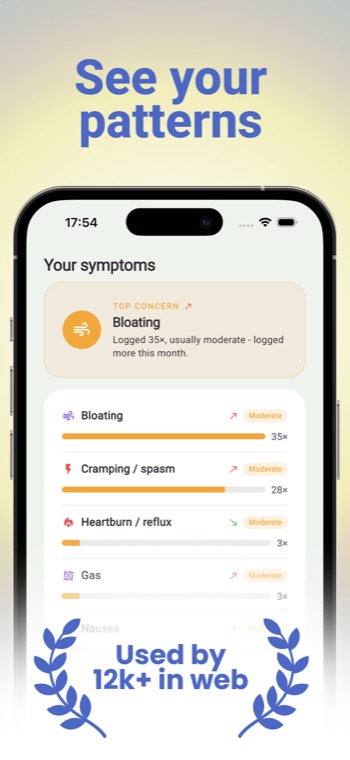
Find your own gut patterns
Belly Care turns a few honest minutes a day into a clear picture of what's linked to how you feel — bloating, IBS, energy and mood.
Download on the App StoreSources
Belly Care helps you observe patterns and build healthy habits — it doesn't diagnose or treat any condition. The patterns it surfaces are starting points to explore, not medical advice. For persistent symptoms, please see a doctor.
Frequently asked questions
How long does it take to check for food intolerance?
Most people start to see meaningful patterns after 7 to 14 days of consistent tracking. Delayed reactions can take longer to connect to specific foods, so 2 to 3 weeks gives a more reliable picture. The elimination and reintroduction phase adds another 1 to 2 weeks per suspected food.
Can I check for food intolerance without a blood test?
Yes. For most intolerances, a food diary combined with elimination and reintroduction is more reliable than commercial blood tests. IgG-based intolerance panels lack scientific backing and are not recommended by expert bodies. Hydrogen breath tests, available through your GP, are useful for confirming lactose or fructose malabsorption specifically.
What is the difference between food intolerance and food allergy?
A food allergy is an immune system reaction that can be rapid and life-threatening, potentially causing skin reactions, breathing difficulties, or anaphylaxis. A food intolerance is a non-immune reaction, usually involving digestion or enzyme deficiency, that causes mainly gut symptoms and is not life-threatening. The distinction matters enormously for how you manage each condition.
Should I eliminate multiple foods at once or one at a time?
One at a time is almost always the better approach. Removing several foods simultaneously might relieve symptoms, but you will not know which food was responsible, and you risk unnecessarily restricting your diet long-term. Remove one suspect food, wait 5 to 7 days, reintroduce it, observe, then move on to the next.