 Belly Care
Probiotics may support gut barrier health, but the honest answer is: the evidence is promising and still limited. Most of the strongest data comes from people with specific conditions like IBS or IBD, not from a general "leaky gut syndrome" diagnosis.
If you are trying to figure out whether probiotics are worth adding to your routine, this guide walks through what the science actually shows, which strains matter, and what else you can do alongside them.
What leaky gut actually is (and why it matters)
In research, "leaky gut" is usually called increased intestinal permeability. It describes a state where the tight junctions between cells in your gut lining become more permeable than usual, potentially allowing bacteria and other molecules to pass through more easily.
It is worth knowing that "leaky gut syndrome" is not a formally recognised medical diagnosis. Increased permeability is real and measurable, but it is usually a feature of conditions like celiac disease, Crohn's disease, or IBS, rather than a standalone root cause.
That matters because symptoms like bloating, fatigue, and digestive discomfort are non-specific. They can come from a long list of things, including SIBO, thyroid issues, and food intolerances. Self-diagnosing "leaky gut" can sometimes delay finding what is actually going on, so it is worth keeping an open mind and speaking with a healthcare professional.
How probiotics may support gut barrier function
The gut lining is maintained by tight junction proteins, a mucus layer, and a healthy immune response. Probiotics can influence all three, but the effects are strain-specific and depend heavily on your underlying situation.
Some strains, particularly within the Lactobacillus and Bifidobacterium families, help produce short-chain fatty acids like butyrate. Butyrate is a key fuel source for the cells lining your colon and may help reinforce tight junctions. Other strains support mucus production and calm inflammatory signalling in the gut wall.
A 2022 lab study using a "Leaky Gut Chip" organ-on-chip model found that both Lactobacillus rhamnosus GG and the multi-strain formula VSL#3 showed barrier-restoring and anti-inflammatory effects. That is useful mechanistic evidence, but lab models do not always translate directly to humans.
On the human side, a 2022 open-label study of 43 IBS patients with documented increased permeability found that a multi-strain Lactobacillus and Bifidobacterium probiotic taken for 30 days led to permeability improvement in 81.5% of participants, with 37% achieving full normalisation. Symptom scores also improved significantly. It is an encouraging result, but it was a small, non-placebo-controlled trial, so it is not the final word.
A 2025 systematic review and meta-analysis looking at prebiotics, probiotics, and synbiotics concluded that these interventions can help reduce increased intestinal permeability in certain contexts. The catch: effects varied widely depending on strain, dose, and the condition being treated. There is no one-size-fits-all answer here.
A 2024 review on gut barrier integrity further highlights that probiotic benefits are most consistent when interventions are tailored to a specific clinical context rather than applied broadly.
Probiotics alone will not fix it: what else matters
This is probably the most important section in this article. Probiotics are one piece of a much bigger picture, and for most people, diet and lifestyle changes will move the needle more than any supplement on its own.
A 2024 review in Current Treatment Options in Gastroenterology is direct about this: no probiotic strain has been specifically studied to treat a pathological condition defined as "leaky gut syndrome." The evidence we have is mostly adjunctive, meaning probiotics help alongside other treatments in specific diseases.
Things that may matter just as much, or more, include reducing ultra-processed foods, cutting back on excess alcohol, managing stress, getting consistent sleep, and moving your body regularly. All of these influence gut permeability through different pathways.
If you are not sure where to start, tracking your gut patterns with Belly Care for a week or two before making any changes gives you a real baseline. You will start to see which meals, habits, or stressors seem to correlate with your symptoms, and that is genuinely useful information.
Gut-friendly foods that work alongside probiotics
Food is foundational here. Before reaching for supplements, it is worth looking at what you are eating day to day.
Prebiotic fiber feeds the beneficial bacteria you already have. Onions, garlic, asparagus, oats, and slightly underripe bananas are all good sources. Increasing your fiber intake is one of the most evidence-backed things you can do for gut health.
Fermented foods add live cultures naturally and may be just as useful as a supplement for many people. Yogurt with live cultures, kefir, sauerkraut, kimchi, and miso are all worth including if you tolerate them. Some researchers suggest fermented foods may offer a broader range of strains than most capsule-based probiotics.
Polyphenol-rich foods like berries, green tea, and extra-virgin olive oil may also support a healthy microbiome by acting as fuel for beneficial bacteria. Bone broth is popular in gut-health circles, and while some people find it soothing, the direct evidence for barrier repair in humans is limited.
Choosing a probiotic (if you want to try one)
If you have sorted out the diet basics and want to add a probiotic, here is what to look for. Focus on multi-strain formulas containing Lactobacillus and Bifidobacterium species, as these are the most studied for gut barrier support.
CFU count (colony-forming units) matters less than strain quality and product integrity. A range of 10 to 50 billion CFU is reasonable for most people. More important is whether the product has been third-party tested by organisations like NSF or USP, which reduces the risk of dead cultures or mislabelled products.
Shelf stability is also worth checking. Some strains need refrigeration; others are shelf-stable. Neither is inherently better, but you want to know the product has been stored correctly before you buy it.
Some people notice changes within a couple of weeks. Others need four to eight weeks before anything shifts. Give it a fair run before deciding it is not working for you.
How to track what is actually helping
This is where most people go wrong: they change three things at once and have no idea what made the difference. A more useful approach is to add one change at a time and watch what happens.
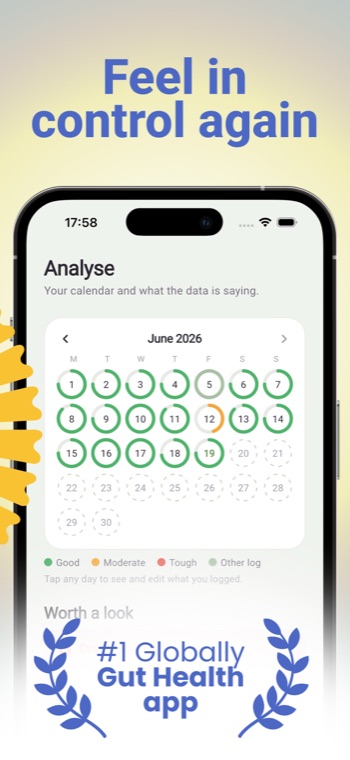
Log your meals, symptoms, stool consistency, energy, and mood in Belly Care for at least a week before starting anything new. That is your baseline. Then add your probiotic, or increase your fiber, or cut back on processed food, and keep logging. Patterns become visible pretty quickly when you have the data in front of you.
Belly Care uses the Bristol Stool Scale to help you track stool consistency over time, which is one of the clearest signals of how your gut is responding to changes. It sounds basic, but it is genuinely one of the most informative things you can monitor.
If nothing changes after six to eight weeks, that is useful information too. It may mean that particular probiotic is not the right fit for you, or that something else needs addressing first. That is not a failure; it is data.
When to see a doctor
Persistent bloating, diarrhoea, or constipation that lasts more than a few weeks deserves a proper evaluation. These symptoms are non-specific and can point to conditions like celiac disease, IBD, IBS, or SIBO, all of which need professional assessment rather than self-managed supplementation.
If you are currently taking antibiotics or immunosuppressants, check with your doctor before starting a probiotic. If your symptoms are severe, worsening, or accompanied by blood in your stool, unexplained weight loss, or significant pain, please see a doctor promptly.
Probiotics are generally safe for healthy adults, but they are not a substitute for finding out what is actually driving your symptoms.

Find your own gut patterns
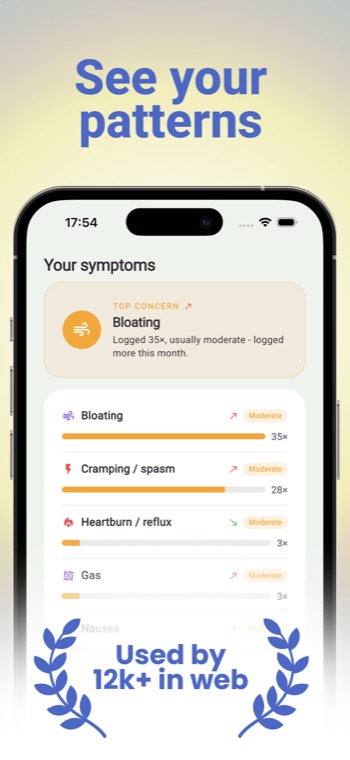
Belly Care turns a few honest minutes a day into a clear picture of what's linked to how you feel — bloating, IBS, energy and mood.
Download on the App StoreSources
- Leaky Gut Chip: organ-on-chip model of intestinal barrier function (Scientific Reports, 2022)
- Multistrain probiotic in IBS with increased intestinal permeability (PubMed, 2022)
- Leaky gut syndrome: myths and management (PMC, 2024)
- Reinforcing gut integrity: systematic review and meta-analysis of prebiotics, pro- and synbiotics (ScienceDirect, 2025)
- Gut barrier integrity: a 2024 review (PMC)
- Leaky gut syndrome - Cleveland Clinic
- Leaky gut syndrome and probiotics - Time Magazine
Belly Care helps you observe patterns and build healthy habits — it doesn't diagnose or treat any condition. The patterns it surfaces are starting points to explore, not medical advice. For persistent symptoms, please see a doctor.
Frequently asked questions
Do probiotics actually heal leaky gut?
Probiotics may help reduce increased intestinal permeability, particularly in people with IBS or IBD, but they have not been proven to heal leaky gut as a standalone treatment. A 2022 study found 81.5% of IBS patients with documented permeability issues showed improvement after 30 days on a multi-strain probiotic, but it was a small, non-placebo-controlled trial. The honest answer is that they may help as part of a broader approach that includes diet, sleep, and stress management, but they are not a cure on their own.
Which probiotic strains are best for gut barrier health?
Strains from the Lactobacillus and Bifidobacterium families have the most research behind them for gut barrier support. Lactobacillus rhamnosus GG is one of the most studied individual strains. Multi-strain formulas tend to be better researched than single-strain products for this purpose. Effects are strain-specific, so a product with named strains and third-party testing (NSF or USP certified) is a better bet than a generic probiotic blend.
How long does it take for probiotics to work?
It varies. Some people notice changes in digestion and stool consistency within one to two weeks. For gut barrier-related benefits, the 2022 IBS study used a 30-day protocol, and many practitioners suggest giving any probiotic four to eight weeks before assessing whether it is helping. Tracking your symptoms daily, rather than relying on memory, makes it much easier to spot genuine changes.
Can I get probiotics from food instead of supplements?
Yes, and for many people fermented foods are a great starting point. Yogurt with live cultures, kefir, sauerkraut, kimchi, and miso all contain live bacteria. Some researchers suggest fermented foods may actually deliver a broader range of strains than most capsule-based supplements. That said, if you have a specific condition or need a particular strain at a therapeutic dose, a targeted supplement may be more appropriate. Food and supplements can also work well together.