 Belly Care
A prebiotic fiber supplement feeds the beneficial bacteria already living in your gut, helping them produce short-chain fatty acids (SCFAs) that support digestion, immunity, and metabolism. Whether you actually need one, though, depends heavily on what you are already eating — and the science is more nuanced than most supplement labels suggest.
The honest answer is: food comes first, supplements can help in the right situation, and your individual response will vary. Here is what the evidence actually says.
What is prebiotic fiber and why does it matter?
Prebiotic fiber is a type of carbohydrate your body cannot digest. Instead of being absorbed in the small intestine, it travels to your colon where gut bacteria ferment it — and that fermentation is the whole point.
When bacteria break down prebiotic fiber, they produce SCFAs like butyrate, acetate, and propionate. These compounds support the cells lining your gut, help regulate inflammation, and play a role in metabolic signalling — which is why researchers are so interested in them.
Not all soluble fiber qualifies as prebiotic. The main types with solid evidence behind them are inulin, FOS (fructooligosaccharides), GOS (galactooligosaccharides), and resistant starch. Each ferments a little differently and feeds slightly different bacterial communities.
Prebiotic fiber sources: food vs. supplements
Before reaching for a supplement, it is worth knowing that many everyday foods are rich in prebiotic fiber. Some of the best sources include:
- Garlic and onions — high in inulin and FOS
- Leeks and asparagus — good sources of inulin-type fructans
- Chicory root — one of the most concentrated natural sources of inulin
- Oats and barley — rich in beta-glucan, a prebiotic soluble fiber
- Under-ripe bananas — contain resistant starch
- Cooled cooked potatoes and rice — resistant starch increases as they cool
- Jerusalem artichokes and dandelion greens — less common but very high in inulin
Whole foods bring other nutrients alongside the fiber — vitamins, polyphenols, and additional fiber types your gut also benefits from. Most GI specialists recommend a food-first approach for exactly this reason.
That said, supplements offer convenience and precise dosing. If your diet is genuinely low in plant variety, or you have a condition that makes eating large amounts of these foods difficult, a supplement can fill a real gap.
Do prebiotic fiber supplements actually work?
The evidence is genuinely promising, but with an important caveat: your baseline diet matters a lot. A 2022 crossover study found that prebiotic supplements consistently increased Bifidobacterium and other SCFA-producing bacteria — but the benefits were much greater in people who were already eating low amounts of fiber. People who already met recommended fiber targets saw minimal changes.
A 2024 trial reinforced this finding, showing that a low-dose prebiotic reduced markers of metabolic inflammation in young adults — but only in those with low habitual fiber intake. If you are already eating 25 to 30 grams of fiber a day from varied plant foods, a supplement may add less than you would expect.
For specific situations, the picture is more encouraging. A 2025 randomised trial found that 12 grams of chicory inulin daily for four weeks increased stool frequency, improved abdominal symptoms, and raised butyrate-producing Bifidobacterium in adults with constipation-predominant symptoms. That is a meaningful result for people who struggle with regularity.
Emerging research also points to benefits beyond the gut. A recent study found that prebiotic fiber supplementation reduced harmful gut metabolites and improved markers of liver health — an area of growing interest as researchers explore the gut-liver axis.
How to choose a prebiotic fiber supplement
With so many products on shelves, knowing what to look for helps. The active ingredient is the starting point — check the label for inulin, FOS, GOS, XOS (xylo-oligosaccharides), or resistant starch. These are the types with the most research behind them.
Different fiber types ferment differently and suit different goals. Inulin and FOS are well-studied for supporting Bifidobacterium and improving bowel habits. Resistant starch tends to be gentler on the gut and is a good starting point if you are sensitive.
Start low and go slow — around 2 to 5 grams daily — then increase gradually over two to four weeks. This gives your bacterial community time to adapt. Third-party testing marks such as NSF or USP add confidence that what is on the label is actually in the capsule.
The FODMAP consideration
If you have IBS or a sensitive gut, this is worth knowing: many prebiotic fibers are high-FODMAP. Inulin and FOS in particular ferment quickly, which can mean significant bloating and gas for people who are already FODMAP-sensitive.
This does not mean prebiotics are off the table — it means you need to proceed more carefully. Consider learning about FODMAPs and how they affect your digestion before starting a high-dose inulin supplement if you already struggle with bloating.
Resistant starch — found in cooled potatoes, cooled rice, and green bananas — is generally lower-FODMAP and still delivers prebiotic benefits. It is often a gentler entry point for sensitive guts. Starting with small amounts of prebiotic foods you have already tolerated is another sensible strategy.
What to expect when you start
Some people notice improvements in regularity or energy within a few days. For others, it takes two to four weeks for their bacterial community to shift enough to feel a difference. Both timelines are normal.
Bloating or gas in the first week or two does not necessarily mean something is wrong. It often means your bacteria are actively fermenting — which is the whole point. It usually settles as your gut adapts, especially if you started at a low dose.
Combining prebiotic fiber with probiotic-rich foods like yogurt, kefir, or sauerkraut is something many people find helpful. The idea is that you are feeding existing bacteria and introducing new ones at the same time. The evidence for this combination is still emerging, but research into how prebiotics interact with the broader microbiome continues to develop.
Your response will also depend on factors beyond the supplement itself — stress levels, sleep, overall diet, and the existing makeup of your gut bacteria all play a role.
How to track what works for you
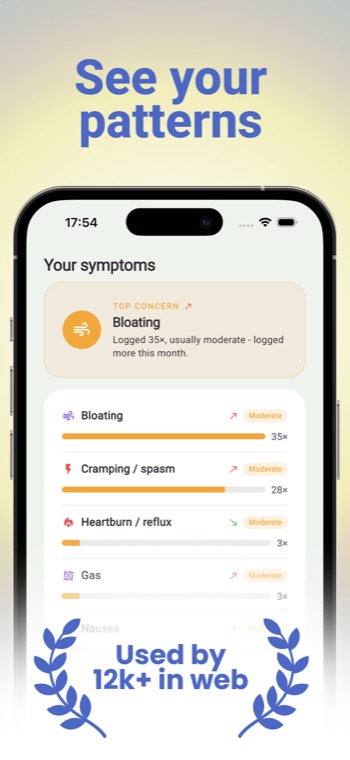
Generic advice only gets you so far. Your gut is individual, and the most useful data is your own. Belly Care lets you log your meals, fiber intake, and symptoms together so you can see what is actually happening rather than guessing.
By around day seven of consistent logging, patterns often start to emerge. You might notice that a particular prebiotic food correlates with bloating, or that your digestion improves on days when you hit a certain fiber target. That is genuinely useful information.
You can also use Belly Care's Bristol stool scale tracker to monitor changes in stool consistency as you introduce more prebiotic fiber — a simple but surprisingly informative signal. Track your fiber intake and symptoms in Belly Care to build a clear picture of what your gut actually responds to.
If symptoms persist or worsen after a few weeks, it is worth speaking with your GP or a registered dietitian. A persistent change in bowel habits, pain, or unexplained bloating always deserves a proper assessment.
The bottom line
A prebiotic fiber supplement can be a genuinely useful tool — especially if your diet is low in plant variety, you are dealing with constipation, or you are working on building a healthier gut microbiome. But it is not a magic fix, and the evidence consistently points to whole food sources as the foundation.
If you do try one, start low, be patient, and pay attention to your own response. The best prebiotic fiber is the one your gut actually tolerates and that fits into your life consistently.


Find your own gut patterns
Belly Care turns a few honest minutes a day into a clear picture of what's linked to how you feel — bloating, IBS, energy and mood.
Download on the App StoreSources
- Study suggests prebiotic supplement benefits were dependent on dietary fiber intake — Stanford Lifestyle Medicine
- Prebiotic fiber and metabolic endotoxemia — ScienceDirect
- Chicory inulin and constipation trial — PubMed
- Prebiotic fiber supplement reduces harmful gut metabolites and improves liver health — News Medical
- Prebiotic dietary fiber and health effects — PMC
- Prebiotic fiber, microbiome and health — ScienceDirect (Journal of Nutrition)
- GI supplements overview — Banner Peak Health
Belly Care helps you observe patterns and build healthy habits — it doesn't diagnose or treat any condition. The patterns it surfaces are starting points to explore, not medical advice. For persistent symptoms, please see a doctor.
Frequently asked questions
Do I need a prebiotic fiber supplement if I already eat enough fiber?
Probably not. Research suggests the biggest benefits go to people with low habitual fiber intake. If you are already eating 25 to 30 grams of fiber daily from varied plant foods such as vegetables, legumes, and wholegrains, a supplement is likely to add less than you would expect. Focus on food variety first, and consider a supplement only if you have a specific goal like improving regularity or you genuinely struggle to eat enough prebiotic-rich foods.
Can prebiotic fiber supplements cause bloating, and is that normal?
Yes, and yes — up to a point. Bloating and gas in the first one to two weeks are common because your gut bacteria are actively fermenting the fiber, which produces gas as a byproduct. This usually settles as your microbiome adapts. Starting at a low dose of 2 to 5 grams daily and increasing gradually over a few weeks helps a lot. If bloating is severe or does not improve after a few weeks, it is worth speaking to a doctor or dietitian, especially if you have IBS.
What is the difference between prebiotic and probiotic supplements?
Prebiotics are fibers that feed the beneficial bacteria already living in your gut. Probiotics are live bacteria you introduce from outside — found in fermented foods like yogurt and kefir, or in capsule form. Think of prebiotics as fertiliser for your existing gut garden and probiotics as planting new seeds. They work differently, and some people find combining both helpful, though the evidence for synbiotic (combined) approaches is still developing.
How long does it take to feel the effects of a prebiotic fiber supplement?
It varies. Some people notice improvements in regularity or reduced bloating within a few days. For others, it takes two to four weeks for the bacterial community to shift enough to feel a meaningful difference. Consistency matters more than speed — taking a small dose daily is more effective than a large dose occasionally. Logging your symptoms alongside your intake can help you spot when things start to shift.