How a Symptom Tracker App Helps You Spot Gut Patterns
 Belly Care team
3 May 2026
6 min read
Belly Care team
3 May 2026
6 min read

A symptom tracker app is one of the simplest, most practical tools you can use to understand what is going on in your gut. Instead of trying to remember what you ate three days ago or describe a vague pattern to your doctor, you build a real, timestamped record that actually tells a story.
The evidence backs this up. A 2016 feasibility study of a smartphone IBS tracker found that 73% of participants had at least one strong, detectable link between their GI symptoms and a specific meal nutrient, identified over just two weeks of logging. That is not guessing. That is data.
Why tracking symptoms actually works
Memory is surprisingly unreliable when it comes to food and symptoms. You might remember the meal that made you feel terrible, but you will probably forget the three times you ate the same thing and felt fine.
Patterns only emerge over time, and a week of consistent data beats a month of guessing. Written records also strip out the emotion and bias from the story you tell yourself, so you stop blaming foods you have already decided are bad and start looking at what the numbers actually show.
There is a practical benefit for your healthcare team too. A 2021 review of digital health tools for functional GI disorders noted that app-based logs help clinicians get more complete, less biased symptom histories than retrospective recall alone. Handing your doctor a week of real data is far more useful than saying you think it might be dairy.
What to log in a symptom tracker app
The goal is not to log everything. It is to log the right things. Specific foods matter far more than calorie counts, so write down what you actually ate, not just "lunch."
For digestive symptoms, focus on bloating, gas, cramping, constipation, urgency, and stool consistency. If you are not sure how to describe stool consistency, explore the Bristol stool scale and what your poop is telling you for a simple, standardised way to log something that is otherwise awkward to describe.
Timing is one of the most valuable things you can capture. Log when you ate and when symptoms appeared, because that gap is often the clue. Gut symptoms can show up anywhere from 30 minutes to 24 hours after a trigger, so the connection is not always obvious without a record.
Do not forget mood, stress, sleep, and exercise. The gut-brain connection is well established, and research using food and symptom diary data has shown that personal stress-symptom relationships are just as detectable as food-symptom ones. A stressful day combined with a late dinner and low fibre can trigger symptoms that no single factor would cause alone.
How to spot real patterns, not false ones
One bad reaction does not make a pattern. You are looking for repeats: ideally two or three occurrences of the same symptom following the same food, time of day, or situation.
Watch the timing gap carefully. If bloating tends to hit you two hours after eating, that is a clue worth following. If it happens at different times with no consistent link, the trigger might be something else entirely, like stress or disrupted sleep.
Think about clusters too. It is rarely one food in isolation. Stress, eating late, low fibre, and a rushed meal can all stack up, and removing just one variable might not be enough to see a change. That is why context matters as much as the food itself.
Ignore coincidences. One rough day after eating pizza does not mean pizza is your enemy. Look for the repeat, not the exception.
Why a dedicated app beats pen and paper
Timestamps are automatic in an app, so there is no guessing whether you ate at 6pm or 8pm. That precision matters when you are trying to map a symptom to a meal.
Search and filter features let you pull up every instance of "bloating" or "pasta" in seconds, something that would take ages in a notebook. Visual charts and trends are also much easier to read than a list of handwritten entries, especially after a few weeks of data.
Consistency is the biggest win. You are far more likely to log if it takes 30 seconds on your phone than five minutes with a pen. A 2024 study on app-based GI symptom monitoring confirmed that adults with chronic digestive symptoms engage with these tools consistently, and some reported improvements in symptom burden over the monitoring period.
Apps like Belly Care are built specifically for gut health tracking, so you are not adapting a generic notes app to do something it was not designed for. The logging prompts are relevant, the Bristol scale is built in, and patterns surface automatically rather than requiring you to do the analysis yourself.
Common tracking mistakes to avoid
The most common mistake is logging too much detail too soon. Start simple: just meals, symptoms, and timing. You can add stress scores and sleep data once logging feels like a habit.
Do not expect instant answers. Give it at least seven days of consistent logging before you look for patterns. Most people who quit early do so right before the data would have started making sense.
Avoid blaming single foods without context. Portions, stress levels, sleep quality, and how fast you ate all influence how your gut responds. A food that triggers symptoms when you are exhausted and anxious might be completely fine on a relaxed weekend.
Most importantly, use tracking as a tool for exploration, not self-diagnosis. Symptom patterns are clues, not conclusions. A diagnosis of IBS or a food intolerance needs clinical assessment, not just an app log. If your symptoms are persistent, painful, or affecting your quality of life, please see a doctor.
Next steps: from data to action
After seven to ten days of logging, sit down and review your entries. Look for anything that stands out: a food that appears before most of your worst symptom days, a time of day when things consistently go wrong, or a pattern around stress or poor sleep.
Then test one suspected trigger at a time. Removing five foods at once tells you nothing useful. Remove one, observe for a week, and let the data guide the next step. Belly Care is designed to help you spot your triggers in 7 days, with prompts and pattern summaries that make this process much less overwhelming.
Share your logs with your doctor or dietitian. A week of timestamped food and symptom data is genuinely useful for them, far more so than a verbal summary. Structured digital tracking is increasingly recognised as a way to support better clinical conversations about gut health.
Keep tracking as you experiment. The app is not just for finding triggers. It is your proof of what is actually working. When you make a change and feel better, your log is the evidence that confirms it was not just a coincidence.
If you are ever unsure whether what you are experiencing is a pattern worth investigating or something that needs medical attention, err on the side of caution and check in with a healthcare professional. Tracking is a brilliant starting point, but it works best alongside proper medical care, not instead of it.

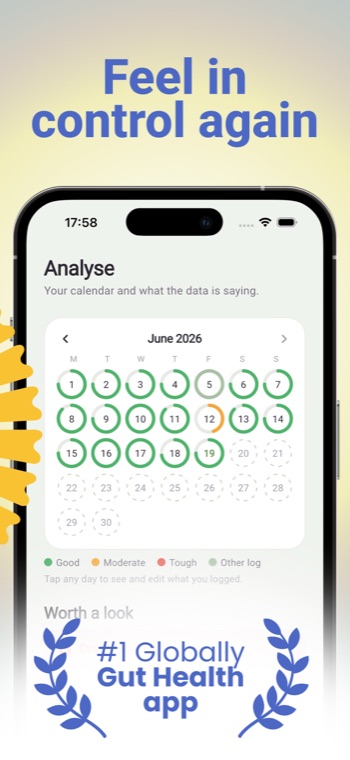
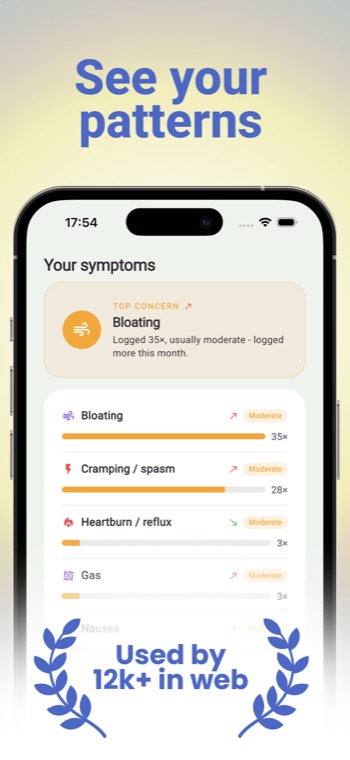
Find your own gut patterns
Belly Care turns a few honest minutes a day into a clear picture of what's linked to how you feel — bloating, IBS, energy and mood.
Download on the App StoreSources
- Smartphone app a feasible symptom tracker for IBS patients (GI.org, 2016)
- mySymptoms users help advance research on managing IBS symptoms
- Digital health for functional GI disorders (Mass General Advances in Digestive Health, 2021)
- App-based GI symptom monitoring and improvements in digestive symptoms (PMC, 2024)
- IBS symptom tracker guide (CareClinic)
- How to use the CDHF myIBS app (Canadian Digestive Health Foundation)
Belly Care helps you observe patterns and build healthy habits — it doesn't diagnose or treat any condition. The patterns it surfaces are starting points to explore, not medical advice. For persistent symptoms, please see a doctor.
Frequently asked questions
How long does it take to see patterns in a symptom tracker app?
Most people start to see meaningful patterns after 7 to 10 days of consistent logging. One or two days of data is not enough, because a single reaction could be a coincidence. Give it at least a week and look for symptoms that repeat in similar circumstances rather than one-off events.
What is the difference between a symptom tracker app and a food diary?
A food diary records what you eat. A symptom tracker app records what you eat and how you feel afterwards, including digestive symptoms, mood, sleep, and stress, with timestamps. That combination is what lets you connect the dots between a meal and a reaction, especially when symptoms appear hours later.
Can a symptom tracker app diagnose IBS or food intolerance?
No, and it is important to be clear on this. A symptom tracker app can help you spot patterns and identify possible triggers, but it cannot provide a medical diagnosis. IBS and food intolerances need clinical assessment, sometimes including blood tests, stool tests, or other investigations. Use your app data to have a better conversation with your doctor, not to replace that conversation.
Should I track every single meal and symptom, or just the obvious ones?
Start by tracking every meal and any digestive symptoms you notice, even mild ones. You do not need to log every minor mood shift or every glass of water, but consistency with meals and symptoms matters. After a week or two, you will have enough data to narrow your focus to the things that seem most relevant to your gut health.