 Belly Care
If you have IBS, you have probably noticed that symptoms do not follow a neat, predictable script. That is because IBS does not have one single cause. Research shows it is driven by a cluster of factors including food, stress, hormones, and gut sensitivity that interact differently in every person.
The good news is that your triggers can be identified. It just takes patient, structured observation rather than guesswork. This guide walks you through what the evidence says and how to start finding your own patterns.
Why IBS triggers are so personal
IBS is what doctors call a gut-brain disorder. It involves disrupted communication between your digestive system and your nervous system, heightened sensitivity to normal gut sensations, and altered gut motility. There is no single structural cause, which is exactly why triggers vary so much from person to person.
What sends one person rushing to the bathroom might not bother someone else at all. Triggers often combine, too. A meal that is fine on a calm Tuesday might cause real trouble on a stressful Friday. That is not in your head; it is how the gut-brain axis actually works.
The only reliable way to understand your pattern is to observe it over time. No quiz or generic list can do that for you.
Common patterns worth paying attention to
The areas below are not universal culprits. Think of them as starting points, not a checklist of things you must avoid.
Certain foods, especially high-FODMAP ones
More than 80% of adults with IBS can identify at least one food trigger, according to recent research. FODMAPs are fermentable carbohydrates found in foods like onions, garlic, wheat, apples, and legumes, and they are among the most studied triggers. In blinded trials, fructans and mannitol were the most common culprits when symptoms returned after a low-FODMAP elimination phase.
That said, not every high-FODMAP food will affect you, and some people's triggers have nothing to do with FODMAPs at all. Fatty meals, spicy food, caffeine, and alcohol are also worth watching.
Meal timing and portion size
Large meals stretch the gut and trigger stronger contractions, something that is more noticeable when you have visceral hypersensitivity. Eating quickly, skipping meals, or eating late at night can all play a role for some people.
Stress and sleep quality
The gut and brain are in constant two-way conversation. Anxiety and psychological stress are well-established IBS triggers; they can alter gut motility, increase pain sensitivity, and even affect the gut microbiome. Sleep disruption matters too. StatPearls notes that psychological comorbidities like anxiety and depression directly modify symptom perception in IBS.
Hormonal cycles
IBS is roughly twice as common in women, and there is now a biological explanation. A 2024 study in Science found that estrogen amplifies gut pain signalling by increasing communication between certain cells in the gut lining. Many women notice symptoms shift across their menstrual cycle, and that is worth tracking.
Caffeine and alcohol
Both can speed up gut motility and irritate the gut lining. Coffee in particular stimulates the gastrocolic reflex, the urge to go shortly after drinking it. Some people tolerate these fine; others find even small amounts are a reliable trigger.
Eating speed
Eating quickly means swallowing more air and giving your gut less time to prepare for digestion. Some people find that slowing down and chewing thoroughly makes a noticeable difference. It is a low-effort change worth trying.
How to track and spot your triggers
Tracking does not need to be complicated, but it does need to be consistent. Even a week of good data can start to reveal patterns.
Here is what is worth logging each day:
- What you ate, when, and roughly how much, including drinks, snacks, and any supplements or medications
- Your symptoms, such as bloating, pain, urgency, constipation, or diarrhoea, and when they appeared
- Stool type, using the Bristol Stool Scale (types 1 to 7) for a consistent way to note changes; Belly Care includes it as a built-in logging tool so you do not have to guess
- Stress and mood, even a simple 1 to 5 rating helps you see gut-brain patterns over time
- Sleep quality, since poor sleep the night before can prime your gut for a harder day
- Menstrual cycle phase, if relevant
After 7 to 14 days, look for clusters. Did symptoms follow a particular meal? A stressful afternoon? A night of poor sleep? You are not looking for proof; you are looking for patterns worth testing further.
One trigger rarely acts alone. A meal that is fine when you are relaxed might cause symptoms when you are anxious. That combination is often the real trigger.
Reading your patterns without jumping to conclusions
Correlation is not causation. If you had bloating after pizza, it does not automatically mean cheese is the problem. It could be the wheat, the onions, the portion size, the fact you ate quickly, or the stressful conversation you had over dinner.
Test one change at a time if you want to isolate something. Remove or reduce one variable for a week or two, keep everything else the same, and see what happens. That is far more informative than overhauling your whole diet at once.
Also keep in mind that food-related IBS symptoms can be delayed, sometimes appearing 12 to 48 hours after eating. A symptom on Wednesday morning might trace back to Tuesday's lunch, not Wednesday's breakfast. That delay is one reason tracking is so much more useful than trying to remember.
Your triggers may also shift over time. Life stress, changes in your gut microbiome, illness, or hormonal changes can all alter what your gut tolerates. What was fine last year might not be now, and vice versa.
A note on the low-FODMAP diet
The low-FODMAP diet is one of the most evidence-backed dietary approaches for IBS. A randomised trial found 76% of people on a low-FODMAP diet had significant symptom improvement, compared with 58% on medication alone. Those are meaningful numbers.
It is not a long-term eating plan, though. It is a structured elimination-and-reintroduction process designed to identify your specific FODMAP sensitivities. Done properly, it ends with you eating as wide a variety of foods as possible, not a restricted one. It is best done with a registered dietitian, especially because cutting out too many foods without guidance can affect your gut microbiome and nutritional intake.
Tracking your baseline symptoms before any dietary changes gives you a clearer picture of what is actually helping when you do start experimenting.
When to involve your doctor
Tracking your own patterns is genuinely valuable, but it works best alongside professional support, not instead of it. If your symptoms are persistent, worsening, or significantly affecting your quality of life, please see your GP or a gastroenterologist.
A doctor can rule out other conditions that share symptoms with IBS, including inflammatory bowel disease and coeliac disease, and can refer you to a dietitian for a supervised low-FODMAP trial or other next steps. Ongoing clinical research continues to refine our understanding of IBS management, and your doctor can advise on what is appropriate for you.
Your tracked data is genuinely useful here. Bring it to appointments. A week or two of detailed logs gives a clinician far more to work with than a verbal summary of how you have been feeling.
Red flags that warrant prompt medical attention include unintentional weight loss, blood in your stool, symptoms that wake you from sleep, or a family history of bowel cancer or inflammatory bowel disease.
Using Belly Care to spot your triggers
Consistent tracking is the hard part. Life gets busy and logging falls away. Belly Care is built to make that tracking as frictionless as possible, so patterns actually emerge rather than getting lost in a forgotten spreadsheet.
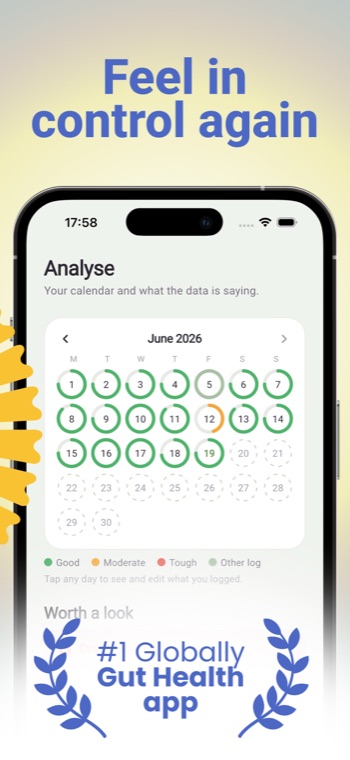
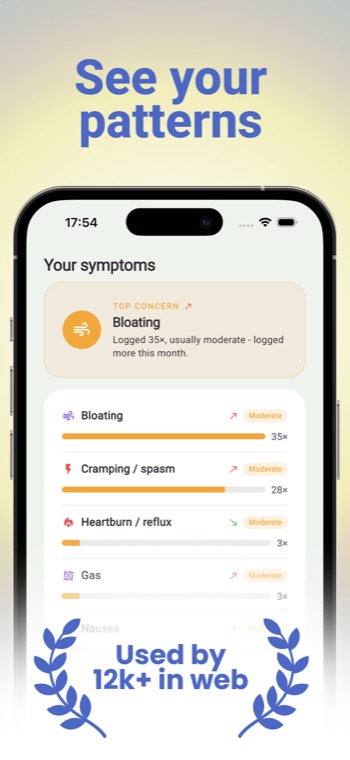
You can log meals, symptoms, mood, stress, and bowel movements in one place. Belly Care scans meals for fibre and FODMAP content, so you can see what you are actually eating, not just what you think you are eating. Evidence-based IBS management increasingly emphasises the value of structured self-monitoring, and that is exactly what consistent logging supports.
By around day seven, Belly Care starts showing you what correlates with your bloating, discomfort, or changes in bowel habits. You are not diagnosing yourself; you are gathering the kind of real-world evidence that helps you and your doctor make smarter decisions.
IBS can feel unpredictable and exhausting. But your gut is telling you something, and with the right tools, you can start to listen.
Frequently asked questions

Find your own gut patterns
Belly Care turns a few honest minutes a day into a clear picture of what's linked to how you feel — bloating, IBS, energy and mood.
Download on the App StoreSources
- StatPearls: Irritable bowel syndrome
- IBS Days 2024: Pathophysiology, overlapping conditions and microbiome therapeutics
- Why are women more likely to get IBS? New study provides clues
- Food intolerance in IBS
- Mayo Clinic: IBS clinical trials and research
- Expert Review of Gastroenterology and Hepatology: IBS management 2025
Belly Care helps you observe patterns and build healthy habits — it doesn't diagnose or treat any condition. The patterns it surfaces are starting points to explore, not medical advice. For persistent symptoms, please see a doctor.
Frequently asked questions
Are IBS triggers the same for everyone?
No. IBS triggers vary significantly from person to person. While certain foods (especially high-FODMAP ones), stress, and hormonal changes are common patterns, what affects one person may not affect another at all. The only reliable way to find your triggers is to track your own symptoms, meals, and lifestyle over time and look for personal patterns.
How long does it take to identify my IBS triggers?
Most people start to see meaningful patterns after 7 to 14 days of consistent tracking. Some triggers are delayed, with symptoms appearing 12 to 48 hours after eating a problem food, so a couple of weeks of data gives a much clearer picture than a few days. Testing one change at a time after that helps you confirm what you have spotted.
Can stress alone cause IBS symptoms?
Yes, it can. The gut and brain are in constant two-way communication via the gut-brain axis, and psychological stress is a well-established IBS trigger. Stress can alter gut motility, increase visceral pain sensitivity, and affect the gut microbiome. For many people, stress also amplifies food-related reactions, so a meal that is fine on a calm day may cause symptoms on a stressful one.
Should I try a low-FODMAP diet to find my triggers?
A low-FODMAP diet can be a very effective way to identify food triggers. Clinical trials show around 76% of people with IBS see significant symptom improvement. However, it is a structured elimination-and-reintroduction process, not a permanent diet, and it is best done with guidance from a registered dietitian to avoid unnecessary food restriction and potential nutritional gaps. Talk to your doctor or dietitian before starting.