 Belly Care
The Bristol stool chart is a simple, seven-type visual scale that classifies stool from very hard lumps to completely watery. Developed by researchers at the University of Bristol in 1997, it gives you a shared language to describe what you see, without awkward guesswork or vague descriptions.
Think of it as a reference guide, not a diagnosis. Used consistently, the Bristol stool form scale helps you spot patterns in your gut health over time and gives you something concrete to share with a doctor if things feel off.
What is the Bristol stool chart?
Dr Kenneth Heaton and his team at the University of Bristol created the scale in 1997 as a quick, inexpensive way to estimate how long stool has spent moving through the bowel. Harder stools generally indicate a slower transit time; looser stools indicate a faster one.
It is now used by gastroenterologists, continence nurses, and gut health practitioners worldwide. A 2023 study validating the updated Bristol stool form scale confirmed it remains reliable for both clinical practice and research. That is over 25 years of real-world use backing it up.
The chart covers seven stool types, and knowing where you sit on that scale is the first step toward understanding your own digestive health patterns.
The seven types: what each one means
Here is a plain-English breakdown of the full scale, based on how Stanford Medicine and other clinical sources define each type.
Types 1 and 2: constipation patterns
- Type 1: Separate hard lumps, similar to small pebbles. Difficult and sometimes painful to pass.
- Type 2: Sausage-shaped but lumpy and hard overall.
Both types suggest stool has been sitting in the colon longer than usual. If you are seeing these regularly alongside bloating or straining, it may be worth exploring constipation patterns with a healthcare professional.
Types 3 and 4: the healthy range
- Type 3: Sausage-shaped with some cracks on the surface. Easy to pass.
- Type 4: Smooth, soft, and sausage-like. Often described as the gold standard.
These two are what most gut health practitioners consider well-formed, healthy stools. They pass without straining, and you tend to feel like your bowel has emptied completely.
Type 5: the middle ground
- Type 5: Soft blobs with clear-cut edges. Still within a typical range for many people, especially those on high-fibre diets, but trending toward looser territory.
Types 6 and 7: loose to watery
- Type 6: Fluffy, mushy pieces with ragged edges.
- Type 7: Completely watery, with no solid pieces at all.
These suggest stool is moving through the bowel very quickly. Occasional loose stools are normal, but if you are regularly seeing types 6 or 7, it is worth paying attention to what might be driving that. The Medical News Today guide to the Bristol stool scale includes a helpful visual breakdown if you want to compare.
Why tracking your Bristol type matters
A single bowel movement tells you very little. A week of logged data starts to tell a story. Shifts in stool type often appear before you notice other symptoms, which makes consistent tracking genuinely useful.
Patterns are where the real insight lives. You might notice that types 6 and 7 tend to follow certain meals, or that types 1 and 2 cluster around stressful weeks or long-haul travel. That kind of correlation is hard to spot without a log.
Tracking also gives you precise language to use with your GP. Instead of saying "my stomach has been off," you can say "I have been consistently type 2 for three weeks with bloating." That is a far more useful starting point for a conversation. The Continence Foundation of Australia highlights this communication benefit as one of the chart's core strengths.
How to use the Bristol scale in Belly Care
Logging your stool type in Belly Care takes about ten seconds. Each time you go, you tap your Bristol type, note the time, and add any symptoms such as urgency, bloating, or discomfort. That is it.
By day seven, the app's insights start to surface patterns you would never catch manually. You might see that your type shifts on days when you have logged less water, or that a particular meal consistently precedes a change in stool consistency.
Everything stays private and local to your phone. There is no judgment and no sharing, just a quiet record of what your gut is doing day to day.
Spotting patterns and triggers
The real value of the Bristol scale is not any single reading. It is the clusters. A one-off type 6 after a rich meal is probably nothing. Type 6 every time you eat dairy? That is a pattern worth exploring.
Common triggers that some people find affect their stool type include:
- Dairy products, especially for those with lactose sensitivity
- High-FODMAP foods such as onions, garlic, or certain legumes
- Dehydration, which can push stools toward types 1 and 2
- Travel and disrupted sleep, which can shift transit time in either direction
- Stress, which has a well-documented effect on gut motility
When you log meals alongside your Bristol type in Belly Care, you can cross-reference the two over time. That is where the tracking really earns its keep. You are not guessing; you are looking at your own data.
One thing worth remembering: look for trends over a week, not single outliers. Day-to-day variation between types 3, 4, and 5 is completely normal. It is the persistent patterns that matter.
A few common misconceptions
"Type 4 is the only healthy stool"
Type 4 is often held up as the ideal, but types 3 and 5 are also within a healthy range for most people. Short-term variation is normal. The concern arises when types 1 and 2 or types 6 and 7 persist over days or weeks, not when you have the occasional softer or firmer stool.
"The chart diagnoses what is wrong"
It does not. The Bristol stool chart is a classification and communication tool, not a diagnostic test. It cannot tell you whether loose stools are caused by IBS, a food intolerance, an infection, or something else entirely. It describes what is happening. A clinician helps figure out why.
"Normal-looking stools mean everything is fine"
Stool form is just one piece of the picture. The chart does not capture colour, odour, or associated symptoms. Blood, mucus, or unexplained pain alongside any stool type still warrants medical attention, regardless of where it sits on the scale. The WebMD Bristol stool scale guide makes this point clearly.
When to see a doctor
The Bristol chart is a tracking tool, and a good one. But some patterns need more than an app. If you have been consistently seeing types 1 and 2 for several weeks, or types 6 and 7 daily, it is worth a conversation with your GP.
Please do not wait if you notice blood or mucus in your stool, severe abdominal pain, or unexplained weight loss alongside any changes in bowel habits. These are red flags that need professional assessment, whatever your Bristol type. The GoodRx Bristol stool chart guide outlines these warning signs clearly.
Think of the chart as a way to describe what is happening, and your doctor as the person who helps you understand why.
Frequently asked questions
What does it mean if my stool type changes from day to day?
Day-to-day variation is completely normal. Moving between types 3, 4, and 5 across a week is nothing to worry about. What matters is whether you are consistently landing in the harder range (types 1 and 2) or the looser range (types 6 and 7) over several days. Single outliers are rarely meaningful on their own.
Is type 4 always the healthiest stool type?
Type 4 is often described as ideal, but types 3 and 5 are also considered healthy for most people. Your personal normal may sit slightly outside the textbook ideal, and that is fine. Consistency and comfort matter more than hitting a specific number every single day.
How long should I track before I see patterns in Belly Care?
Most people start to see meaningful patterns after about seven days of consistent logging. Two to four weeks gives you an even clearer picture, especially if you are trying to link stool changes to specific foods, stress, or sleep. The more consistently you log, the more useful the insights become.
Can the Bristol chart help me identify food triggers?
It can be a really useful part of that process. On its own, the chart just tells you your stool type. But when you log it alongside meals and symptoms in a digestive health tracking app like Belly Care, you can start to see whether certain foods consistently precede a shift in type. That kind of pattern is much harder to spot from memory alone.

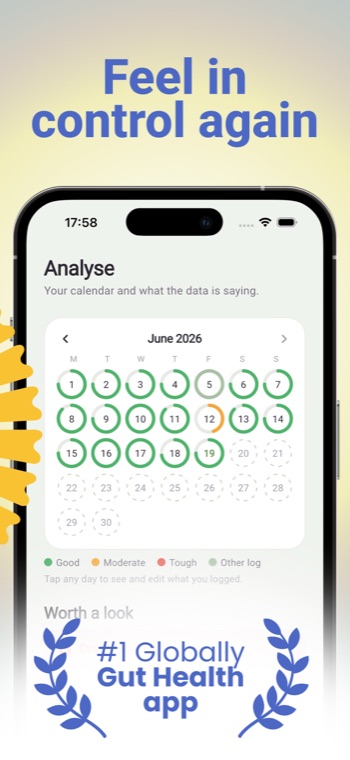
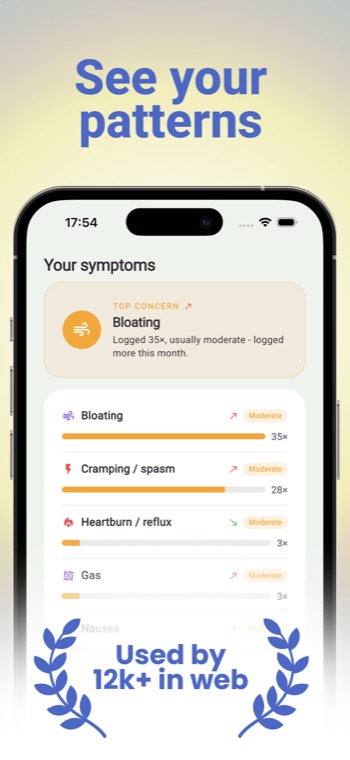
Find your own gut patterns
Belly Care turns a few honest minutes a day into a clear picture of what's linked to how you feel — bloating, IBS, energy and mood.
Download on the App StoreSources
- Bristol Stool Chart - Cleveland Clinic
- New version of the Bristol Stool Form Scale (PMC, 2023)
- Bristol Stool Form Scale - Stanford Medicine Pediatric Surgery
- Bristol Stool Scale - Medical News Today
- Bristol Stool Chart - Continence Foundation of Australia
- Poop Chart: Bristol Stool Scale - WebMD
- Bristol Stool Chart - GoodRx
Belly Care helps you observe patterns and build healthy habits — it doesn't diagnose or treat any condition. The patterns it surfaces are starting points to explore, not medical advice. For persistent symptoms, please see a doctor.
Frequently asked questions
What does it mean if my stool type changes from day to day?
Day-to-day variation is completely normal. Moving between types 3, 4, and 5 across a week is nothing to worry about. What matters is whether you are consistently landing in the harder range (types 1 and 2) or the looser range (types 6 and 7) over several days. Single outliers are rarely meaningful on their own.
Is type 4 always the healthiest stool type?
Type 4 is often described as ideal, but types 3 and 5 are also considered healthy for most people. Your personal normal may sit slightly outside the textbook ideal, and that is fine. Consistency and comfort matter more than hitting a specific number every single day.
How long should I track before I see patterns in Belly Care?
Most people start to see meaningful patterns after about seven days of consistent logging. Two to four weeks gives you an even clearer picture, especially if you are trying to link stool changes to specific foods, stress, or sleep. The more consistently you log, the more useful the insights become.
Can the Bristol chart help me identify food triggers?
It can be a really useful part of that process. On its own, the chart just tells you your stool type. But when you log it alongside meals and symptoms in a digestive health tracking app like Belly Care, you can start to see whether certain foods consistently precede a shift in type. That kind of pattern is much harder to spot from memory alone.