 Belly Care
Stress and stomach problems go hand in hand, and there is solid science behind why. When your brain senses a threat, your gut feels it almost immediately, thanks to a powerful communication network running between them.
This is not weakness or imagination. It is real physiology, and understanding it is the first step toward feeling better. Here is what is actually happening and, more importantly, what you can do about it.
How stress lands in your stomach
Your brain and gut are in constant conversation via the gut-brain axis, a two-way network involving your nervous system, hormones and immune system. The vagus nerve is the main cable in that network, carrying signals in both directions.
When stress hits, your body shifts into fight-or-flight mode. Your sympathetic nervous system takes over and digestion gets deprioritised, because escaping danger matters more to your body than breaking down lunch.
The knock-on effects are real and measurable. Research published in the Journal of Physiology and Pharmacology shows that stress can alter gut motility, lower your pain threshold so that normal gut activity feels uncomfortable, and increase intestinal permeability. Chronic stress can also shift your gut bacteria toward more pro-inflammatory species, as a 2023 review on gut homeostasis explains.
So when you feel nauseous before a big presentation or get cramps on a stressful day, that is your nervous system and gut talking to each other. It is not in your head. It is in your biology.
Recognising your personal stress-gut pattern
Stress-related digestive issues do not look the same for everyone. Some people get loose stools or urgent diarrhoea; others get constipation. Some feel bloated and gassy; others lose their appetite or feel persistently queasy.
The Canadian Society of Intestinal Research notes that stressful life events are linked to symptom flares in IBS, IBD, GERD and peptic ulcer disease. Stress rarely causes these conditions on its own, but it is a significant trigger and amplifier.
A few patterns worth noticing in yourself:
- Bloating or cramping after stressful days — your gut may be reacting to altered motility and heightened sensitivity.
- Loose stools or constipation when anxious — stress can speed up or slow down gut transit, sometimes alternating between the two.
- Nausea or appetite loss during high-pressure periods — your body is diverting resources away from digestion.
- Reflux or heartburn that worsens with tension — stress is a well-documented trigger for GERD symptoms.
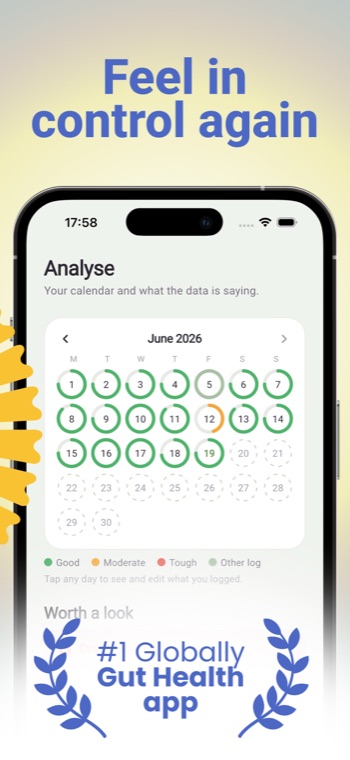
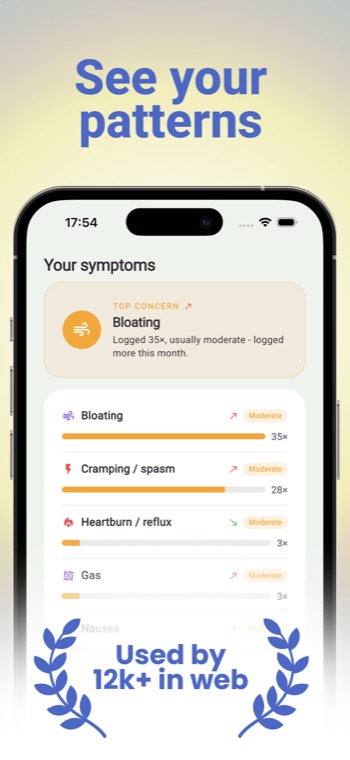
Your pattern is unique to you, which is why tracking mood alongside meals and symptoms is so useful. Belly Care lets you log both in one place, and most people start seeing their personal stress-gut link emerge within about a week.
Simple habits that calm your nervous system
The goal is to shift your body from sympathetic (fight-or-flight) to parasympathetic (rest-and-digest) mode. You do not need anything complicated to do that.
Slow, deliberate breathing
Try breathing in for four counts and out for six. A longer exhale activates your parasympathetic nervous system directly via the vagus nerve. Even three to five minutes of this before a meal may help your gut settle.
A short walk after eating
A gentle 10-minute walk after meals can support digestion and ease tension at the same time. You do not need intensity, just movement and a little fresh air.
Consistent sleep
Going to bed and waking at roughly the same time each day helps regulate cortisol, your main stress hormone, and supports gut function too. Poor sleep and stress tend to reinforce each other, so this one is worth prioritising.
Gentle movement
Yoga, stretching or even a slow cycle can lower stress hormones and support gut motility. Gastroenterology specialists highlight regular movement as one of the most practical tools for managing stress-related digestive issues. No gym membership required.
What you eat when stressed matters
Stress often changes what we reach for. Ultra-processed foods, excess caffeine and alcohol are common go-tos, but they can amplify gut sensitivity and make symptoms worse rather than better.
Magnesium-rich foods such as leafy greens, pumpkin seeds, almonds and dark chocolate may support both your nervous system and digestion. Magnesium plays a role in muscle relaxation, including the smooth muscle lining your gut wall, and many people do not get quite enough of it. It is not a cure, but it is a gentle, food-first place to start.
Staying well hydrated matters too. Your gut lining and nervous system both need adequate fluid to function properly, and dehydration can worsen constipation and headaches that stress already makes more likely.
Finally, try eating slowly. Chewing properly and sitting down without screens signals safety to your nervous system. It sounds almost too simple, but it genuinely shifts your body toward that rest-and-digest state where digestion works best.
Using Belly Care to spot your stress-gut pattern
One of the most empowering things you can do is gather your own data. Stress-gut links are personal, and what triggers one person's bloating may not affect someone else at all.
Belly Care is built for exactly this kind of pattern-finding. Log your meals, symptoms, mood and sleep each day, and within about seven days you will often start to see connections you had not noticed before. Does bloating peak on high-stress days? Do symptoms ease after a good night's sleep or a walk? The app helps you see it clearly.
You can also track which calming habits actually shift your symptoms over time. That feedback loop is genuinely motivating, because you are no longer guessing. And if symptoms persist, your Belly Care logs give you something concrete to share with your GP or a dietitian, making that conversation much more productive.
A note on supplements
Some people find that magnesium glycinate or magnesium citrate supplements help with both stress and constipation. Probiotic supplements are also widely used, and while the evidence is still developing, some gastroenterologists suggest they may help support gut balance during stressful periods.
That said, supplements are not a substitute for addressing the underlying stress, and quality and dosage vary considerably between products. It is worth talking to your GP or pharmacist before adding anything new, especially if you are already taking medication.
When to see a doctor
Most stress-related stomach upsets ease once the stressful situation passes. UChicago Medicine advises that if symptoms last more than a day or two, or keep coming back, it is worth getting checked out.
Please do not wait if you notice any of the following:
- Persistent stomach pain lasting more than a few weeks
- Blood in your stool or vomit
- Unexplained weight loss
- Severe or worsening pain
- Symptoms that wake you from sleep
These need prompt medical attention to rule out conditions unrelated to stress. A GP can investigate properly, offer a diagnosis and discuss longer-term support options, which might include talking therapies such as CBT or gut-directed hypnotherapy. Both have good evidence behind them for IBS and functional gut disorders.
The science is clear: stress and stomach issues are deeply connected, but that same connection means calming your nervous system genuinely helps your gut. Small, consistent habits add up. You do not have to overhaul everything at once.

Find your own gut patterns
Belly Care turns a few honest minutes a day into a clear picture of what's linked to how you feel — bloating, IBS, energy and mood.
Download on the App StoreSources
- The gut-brain connection - Harvard Health
- Stress and the gut: pathophysiology, clinical consequences - PubMed
- Gut homeostasis and stress - ScienceDirect
- Stress and your gut - BadGut (Canadian Society of Intestinal Research)
- Stress stomach pain: when to see a doctor - UChicago Medicine
- How stress impacts your gut and ways to combat it - Rocky Mountain Gastroenterology
- The science behind why stress can wreak havoc on your stomach - BSW Health
Belly Care helps you observe patterns and build healthy habits — it doesn't diagnose or treat any condition. The patterns it surfaces are starting points to explore, not medical advice. For persistent symptoms, please see a doctor.
Frequently asked questions
Can stress actually cause stomach problems, or is it all in my head?
It is definitely not all in your head. Stress triggers real, measurable changes in your gut via the gut-brain axis, including altered motility, increased gut sensitivity, shifts in your gut bacteria and raised intestinal permeability. These are physical processes driven by your nervous system, hormones and immune system. Stress usually amplifies or triggers symptoms rather than causing structural disease on its own, so persistent or severe symptoms always deserve a proper medical check.
What is the fastest way to calm my stomach when I am stressed?
Slow breathing is one of the quickest tools available. Try breathing in for four counts and out for six. A longer exhale directly activates your parasympathetic (rest-and-digest) nervous system via the vagus nerve. Sitting down, eating slowly and stepping away from screens can also help shift your body out of fight-or-flight mode fairly quickly. A short gentle walk helps some people too. These steps will not fix an underlying condition, but they can take the edge off acute stress-related symptoms.
Do vitamins or supplements help with stress-related stomach issues?
Some people find magnesium supplements, particularly magnesium glycinate or citrate, helpful for both stress and constipation. Magnesium-rich foods such as leafy greens and seeds are a good food-first option. Probiotics are also commonly used, and some evidence suggests they may support gut balance during stressful periods, though the research is still developing. Supplements are not a substitute for addressing stress itself, and it is worth checking with your GP or pharmacist before starting anything new, especially if you take other medications.
How long does it take to notice a link between my stress and digestion?
Many people start to see a pattern within about a week of tracking their mood and symptoms together. Acute stress can affect your gut within hours, as anyone who has experienced nervous diarrhoea before an exam will know. Chronic stress tends to build more gradually, making the link harder to spot without a log. Using an app like Belly Care to record meals, symptoms, mood and sleep daily makes these connections much easier to identify, and gives you something useful to share with a doctor if symptoms persist.