 Belly Care
Trapped gas is air that has become stuck somewhere along your digestive tract, and it can feel anything from mildly uncomfortable to genuinely painful. The good news is that most episodes pass on their own, and a handful of simple strategies, like gentle movement and slowing down at mealtimes, may help things along.
What makes trapped gas tricky is that triggers are personal. The same bowl of lentil soup that causes no issues for your friend might leave you doubled over. That is why tracking your own patterns is just as important as any quick fix.
What trapped gas feels like and why it happens
Trapped gas usually shows up as a sharp, cramping pain that moves around your abdomen, pressure or fullness that does not shift, or a feeling that you need to pass gas but cannot quite manage it. It is slightly different from general bloating, which tends to be a more diffuse, swollen sensation rather than a specific pain.
Gas enters your gut in two main ways: you swallow air while eating or drinking, or bacteria in your large intestine ferment undigested food. Research suggests that gas symptoms arise not because you are producing too much gas, but because it is moving through your gut too slowly or is distributed unevenly, which means motility and posture matter a great deal.
You might notice symptoms feel worse after certain meals, later in the day, or when you are stressed. That is not your imagination. Your gut slows down when your nervous system is under pressure, and gas that would normally move through quietly ends up sitting there.
When to see a doctor
Most trapped gas is harmless and short-lived. But persistent or severe symptoms can sometimes point to constipation, food intolerance, IBS, reflux, or other conditions that deserve proper attention. See a doctor if you notice any of the following alongside your gas symptoms:
- Severe or persistent abdominal pain that interferes with daily life
- Unexplained weight loss
- Rectal bleeding or black, tarry stools
- Persistent new diarrhea or constipation
- Vomiting alongside worsening abdominal symptoms
- Fatty, greasy, or unusually foul-smelling stools
- Abdominal swelling that does not go away
These are patterns worth exploring with a healthcare professional, not something to manage alone with home remedies.

Immediate relief: what may help right now
When you are uncomfortable and want relief fast, movement is your best first step. Johns Hopkins recommends a short walk or gentle exercise to help gas move through the bowel. Even 10 to 15 minutes can make a difference, and it does not need to be vigorous. A slow stroll around the block is enough.
Posture changes can also help. Try lying on your left side, bringing your knees to your chest, or settling into child's pose if you practice yoga. These positions shift the angle of your gut and may help gas find its way out more easily.
Some people find a warm compress on the abdomen soothing for cramping, and sipping warm, non-carbonated water or herbal tea can feel calming too. Peppermint and ginger teas are popular choices. While the evidence for trapped gas specifically is limited, Brigham and Women's Hospital notes that peppermint is often recommended for digestive discomfort. Think of it as comfort support rather than a cure.
One thing worth knowing: rushing relief often backfires. Gulping fizzy drinks or pacing anxiously can introduce more air and make things worse. Slow, deep belly breathing, in through the nose and out through the mouth, helps calm your nervous system and may ease the gut tension that is keeping gas stuck.
What about simethicone?
Simethicone, the active ingredient in Gas-X, works by breaking up gas bubbles in the gut. Mayo Clinic notes it may help some people, though the clinical evidence for meaningful benefit in gas pain is quite limited. It is generally considered low-risk, so it is reasonable to try. Just do not expect dramatic results every time.
Track to spot your personal triggers
What triggers gas is genuinely different from person to person. Beans might be fine for you but problematic for someone else. The only reliable way to find your personal patterns is to track them.
Most people start to see patterns within three to five days of logging meals and symptoms. You are not just looking at what you ate, but when you ate it, how fast, how stressed you were, and what your digestion looked like that day. Mayo Clinic recommends keeping a food and symptom diary as a first-line step for identifying personal triggers.
Common food triggers include cruciferous vegetables like broccoli and cabbage, beans and lentils, onions and garlic, and high-fiber foods eaten in large amounts all at once. Dairy can be a factor too, especially if you are low in lactase, the enzyme that breaks down lactose. These are patterns to explore, not foods to automatically eliminate.
Eating habits matter just as much as the food itself. Eating quickly, talking while chewing, drinking through straws, and chewing gum all introduce extra air into your digestive tract. Stress at mealtimes slows gut motility, which means gas sits around longer.
Belly Care makes this tracking process straightforward. You can log meals, note symptoms, and start to see which foods and habits correlate with your worst days. It also flags high-FODMAP ingredients and fiber content, so you are not guessing. Explore high-FODMAP foods and how they affect you to understand why certain plant foods are more likely to ferment in your gut.

Small changes that reduce trapped gas
If there is one change that makes the biggest difference for most people, it is slowing down at mealtimes. Eating slowly and chewing thoroughly reduces the amount of air you swallow and gives your digestive enzymes more surface area to work with. Aiming for 20 to 30 chews per mouthful sounds tedious, but it becomes habit quickly.
If you are increasing fiber in your diet, do it gradually. Adding a large portion of beans or a high-fiber cereal overnight gives your gut bacteria a sudden feast, and the fermentation that follows can be intense. Increasing fiber over two to four weeks gives your gut time to adapt.
Staying hydrated throughout the day, rather than drinking large amounts only with meals, helps keep things moving. Good hydration supports bowel transit, and Johns Hopkins notes that constipation is one of the most common reasons gas feels trapped. When stool backs up, gas has nowhere to go.
It is also worth noticing whether stress or rushing is part of your pattern. Your gut has its own nervous system and responds directly to your emotional state. Some people find that gas is worse on busy, stressful days regardless of what they ate. That is a real, physiological pattern, not just anxiety.
Habits worth dropping
- Drinking through straws
- Chewing gum or sucking on hard candy
- Carbonated drinks, especially with meals
- Eating at your desk or while scrolling your phone
- Talking a lot while chewing
None of these require dramatic lifestyle overhauls. They are small shifts that, combined, can meaningfully reduce how much air ends up in your gut.
When to explore further
If you have tracked your meals and symptoms for a couple of weeks, made some habit changes, and are still dealing with regular trapped gas or bloating, that is worth discussing with a doctor or dietitian. Persistent symptoms can sometimes point to underlying conditions like IBS, lactose intolerance, fructose malabsorption, or SIBO, all of which have specific approaches that go beyond general home care.
A low-FODMAP diet is sometimes recommended for people with recurrent gas and bloating, but it is best done with a dietitian rather than through self-restriction. Cutting foods you do not actually need to avoid can make your diet unnecessarily limiting. Belly Care can help you build a picture of your patterns over time, which is genuinely useful information to bring to any appointment.
Your tracking data is not just for your own curiosity. A log of what you ate, when symptoms appeared, and how severe they were gives a healthcare provider real information to work with, rather than a vague description of feeling gassy sometimes. That specificity can make a real difference in getting the right help faster.
And if you are ever unsure whether what you are feeling is just gas or something more, please do not hesitate to get it checked. Most of the time it is benign, but your gut is worth taking seriously.


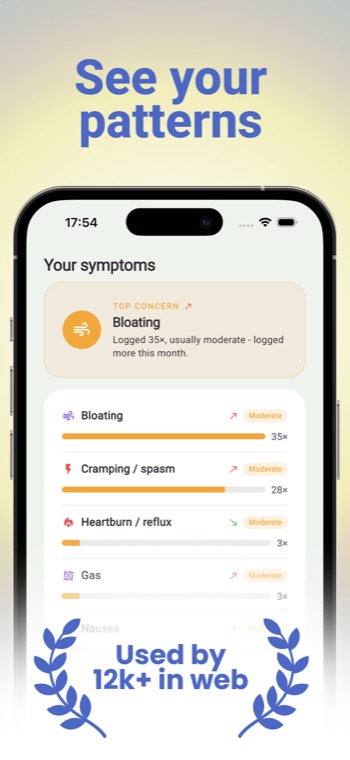
Find your own gut patterns
Belly Care turns a few honest minutes a day into a clear picture of what's linked to how you feel — bloating, IBS, energy and mood.
Download on the App StoreSources
- Gas and gas pains - Diagnosis and treatment | Mayo Clinic
- How to get rid of gas pain | Johns Hopkins Medicine
- Gas and gas pain | Cleveland Clinic
- Gas: beat the bloat | Brigham and Women's Hospital
- Intestinal gas and bloating | Pepto-Bismol
- Immediate relief for trapped gas: home remedies and prevention | Healthline
- Intestinal gas: a review | PMC / PubMed Central
Belly Care helps you observe patterns and build healthy habits — it doesn't diagnose or treat any condition. The patterns it surfaces are starting points to explore, not medical advice. For persistent symptoms, please see a doctor.
Frequently asked questions
How long does trapped gas usually last?
Most episodes of trapped gas resolve within a few minutes to a couple of hours, especially with gentle movement or a posture change. If discomfort persists for several hours or keeps coming back regularly, it is worth reviewing your eating habits and potential food triggers, and seeing a doctor if symptoms are severe or ongoing.
Can certain foods cause trapped gas in some people but not others?
Yes, absolutely. Triggers are highly individual. Beans, cruciferous vegetables, onions, garlic, and high-lactose dairy are common culprits, but whether they affect you depends on your gut bacteria, digestive enzyme levels, and gut motility. Tracking your own meals and symptoms is the most reliable way to find your personal pattern.
Is trapped gas the same as bloating?
They are related but not identical. Trapped gas tends to feel like a sharp, localised pain or pressure that moves around. Bloating is more of a general swollen, full sensation across the abdomen. You can have one without the other, though they often occur together. Both are usually linked to how gas is moving, or not moving, through your gut.
What is the fastest way to relieve trapped gas?
A short walk is one of the most effective and evidence-supported options. Even 10 to 15 minutes can help gas move through the bowel. Changing position, such as lying on your left side or bringing your knees to your chest, and slow, deep breathing may also help. Avoid gulping carbonated drinks, which can add more air and make things worse.