 Belly Care
High fiber foods are one of the simplest, most evidence-backed additions you can make to your diet for a happier gut. Most people eat around 15 g of fiber a day, well below the recommended 25 to 35 g, and that gap quietly affects everything from digestion to energy levels.
The good news is you do not need a dramatic overhaul. Small, steady swaps made gradually can make a real difference without the bloating that puts so many people off fiber in the first place.
Why high fiber foods matter for your gut
Fiber is essentially food for your gut bacteria. When those bacteria ferment fiber, they produce short-chain fatty acids like butyrate, which help keep your gut lining healthy and your immune system calm. A 2024 review in Frontiers in Nutrition found that these microbiome-driven effects are central to fiber's wide-ranging benefits, from lower cardiovascular risk to better blood sugar control.
Beyond feeding your bacteria, fiber adds bulk to your stool and keeps things moving at a comfortable pace. Harvard's Nutrition Source notes that higher fiber intakes are consistently linked to lower risk of heart disease, type 2 diabetes, and diverticular disease, yet most people in industrialised countries still fall well short of daily targets.
The main catch is that adding too much fiber too fast can cause bloating and cramping. Gradual is the word here, and we will come back to exactly how to do that.
It also helps to know that there are two distinct types of fiber, and they work in different ways.
Soluble fiber foods: gentle and soothing
Soluble fiber dissolves in water to form a gel-like substance in your gut. It slows digestion, softens stool, and acts as a prebiotic, feeding the beneficial bacteria that keep your microbiome balanced. Many people find these foods high in soluble fiber easier to tolerate when they are just starting to increase their intake.
Oats, barley, and rye
A bowl of porridge is one of the easiest wins going. Oats contain beta-glucan, a soluble fiber that research links to lower LDL cholesterol and better blood sugar regulation. Barley is similarly rich in beta-glucan, with around 6 g of fiber per cooked cup.
Beans and lentils
These are among the most fiber-packed foods you can eat. A cup of cooked lentils delivers around 15.5 g of fiber, and black beans come in at about 15 g. They are also a great source of plant protein, so they pull double duty at mealtimes.
Apples, pears, and berries
A medium pear with skin has around 5.5 g of fiber, and a cup of raspberries packs an impressive 8 g. These fruits are rich in pectin, a soluble fiber that many people find particularly gentle on the gut. They are easy to add to breakfast or eat as a snack.
Chia seeds and flaxseeds
Small but mighty. Just one ounce of chia seeds (roughly two tablespoons) contains about 10 g of fiber, much of it soluble. Stir them into yogurt, overnight oats, or a smoothie and you have added a meaningful fiber boost without changing your meal much at all.

Insoluble fiber foods: bulking and moving
Insoluble fiber does not dissolve in water. Instead, it adds bulk to your stool and speeds up transit through your intestines, which is helpful if you tend toward constipation. A University of Minnesota study published in Nutrients found that each plant source of insoluble fiber also contains unique bioactive compounds that may offer benefits beyond the fiber itself, which is a good reason to vary your sources.
Whole grains
Whole-wheat spaghetti gives you around 6 g of fiber per cooked cup, and quinoa offers about 5 g. Swapping refined grains for whole-grain versions is one of the most straightforward ways to lift your daily fiber intake without rethinking what you eat.
Leafy greens, broccoli, and root vegetables
Cooked green peas deliver around 9 g of fiber per cup, and a medium baked potato with its skin on has about 4 g. Broccoli, carrots, and leafy greens all contribute insoluble fiber alongside vitamins and minerals that support overall gut health.
Nuts and seeds
A small handful of almonds (about 23 nuts) gives you 3.5 g of fiber along with healthy fats and magnesium. They are one of the most convenient fiber-rich snacks around, and they pair well with fruit to slow sugar absorption too.
The fiber and FODMAP balance
Here is a nuance that often gets missed: some of the most fiber-rich foods are also high in FODMAPs, the fermentable carbohydrates that can trigger bloating, cramping, and loose stools in people with sensitive guts or IBS. Onions, garlic, wheat, and certain fruits like apples and pears are all fiber-rich but FODMAP-heavy.
If you notice that eating more fiber makes your symptoms worse rather than better, it is worth exploring which specific foods are the culprit. Our guide to low-FODMAP foods walks through this in detail.
The good news is there are plenty of soluble fiber foods that are also low in FODMAPs. Good options include:
- Oats (in moderate portions)
- Carrots and green beans
- Blueberries and strawberries
- Chia seeds and flaxseeds
- Quinoa and brown rice
- Canned lentils, rinsed well (smaller portions tend to be better tolerated)
Everyone's gut responds differently, which is why tracking matters. Belly Care lets you log your meals and symptoms side by side, so you can start to see which fiber sources your gut actually likes rather than guessing.
How to add high fiber foods without bloating
Fiber and bloating have a bit of a reputation together, but the bloating usually comes from adding too much too fast, not from fiber itself. Your gut bacteria need time to adjust to a new fuel source. Mayo Clinic recommends increasing fiber gradually and drinking plenty of water alongside it.
Here is a practical approach that tends to work well:
- Add about 5 g of extra fiber per week, not all at once. If you are currently eating 15 g a day, aim for 20 g next week, then 25 g the week after.
- Drink more water. Fiber absorbs water as it moves through your gut. Without enough fluid, it can actually make constipation worse.
- Pair fiber with fat or protein. Berries with yogurt, beans drizzled with olive oil, or an apple with almond butter all slow digestion and tend to be easier on the gut than fiber eaten alone.
- Cook your vegetables. Raw veg is great, but lightly steaming or roasting breaks down some of the cell walls, making fiber easier to digest if your gut is sensitive.
- Log your meals and symptoms for seven days. You will quickly start to see patterns: which foods sit well, which ones cause trouble, and at what portion sizes.
Track your fiber intake and symptoms with Belly Care to build up a picture of your own gut patterns over time. The app uses the Bristol Stool Scale to help you notice changes in bowel habits as your fiber intake shifts, which turns out to be more useful than it might sound.
Simple high-fiber swaps you can make today
You do not need to rethink every meal. These small swaps add up to a meaningful difference in your daily fiber total:
- White bread: swap for whole-grain or sourdough made with whole-grain flour
- Regular pasta: swap for lentil or chickpea pasta (often 10 to 12 g fiber per serving)
- Sugary breakfast cereal: swap for oats topped with berries (roughly 10 to 11 g fiber)
- Snack crackers: swap for a small handful of almonds, pumpkin seeds, or an apple
- White rice: swap for brown rice or quinoa
To put some numbers on it: a cup of raspberries, a cup of cooked oatmeal, and a small handful of almonds together give you around 13.5 g of fiber before you have even had lunch. Mayo Clinic's fiber chart is a handy reference if you want to check specific foods.
The Physicians Committee for Responsible Medicine highlights that people eating more than 26 g of fiber per day show up to 18% lower risk of type 2 diabetes compared to those eating under 19 g. That is a striking reminder of how much the gap between current intake and recommended intake actually matters.
Research published in BMC Medicine reinforces this further, showing that higher dietary fiber intake is associated with reduced all-cause mortality, adding yet another reason to close that gap steadily and sustainably.
Using Belly Care's meal logging to build your fiber intake gradually means you can see exactly where you are starting from and track small wins as you close that gap week by week.
When to see a doctor
Mild bloating or a change in bowel habits when you first increase fiber is normal and usually settles within a week or two. Some symptoms, however, are worth getting checked out properly.
Please speak to your GP or a registered dietitian if you experience:
- Persistent bloating, constipation, or diarrhea that does not improve after a few weeks
- Severe or cramping abdominal pain
- Blood in your stool
- Unexplained changes in bowel habits lasting more than a few weeks
A healthcare provider can rule out conditions like IBS, coeliac disease, or inflammatory bowel disease, all of which affect how your gut handles fiber. The evidence base for dietary fiber is strong, but it works best as part of a plan tailored to your individual gut, especially if you have an underlying condition.


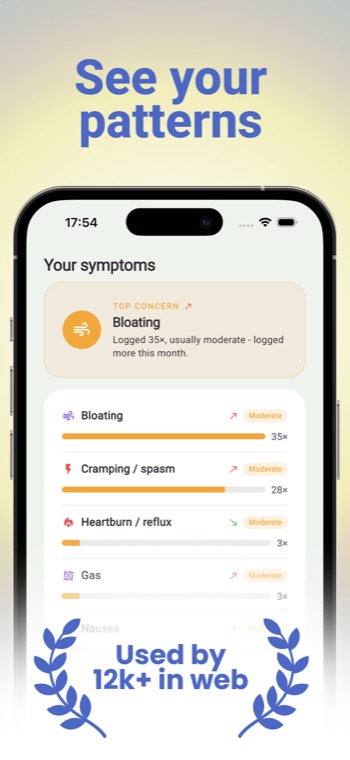
Find your own gut patterns
Belly Care turns a few honest minutes a day into a clear picture of what's linked to how you feel — bloating, IBS, energy and mood.
Download on the App StoreSources
- High-fiber foods - Mayo Clinic
- Fiber - The Nutrition Source, Harvard T.H. Chan School of Public Health
- Dietary fiber: essential for a healthy diet - Mayo Clinic
- Dietary fiber and the gut microbiome - Frontiers in Nutrition
- U of M study suggests even more reasons to eat your fiber - University of Minnesota
- High fiber foods reduce risk of type 2 diabetes - Physicians Committee for Responsible Medicine
- Dietary fiber intake and mortality - PMC
- Dietary fiber - StatPearls, NCBI Bookshelf
Belly Care helps you observe patterns and build healthy habits — it doesn't diagnose or treat any condition. The patterns it surfaces are starting points to explore, not medical advice. For persistent symptoms, please see a doctor.
Frequently asked questions
What is the difference between soluble and insoluble fiber?
Soluble fiber dissolves in water to form a gel in your gut. It slows digestion, softens stool, and feeds beneficial gut bacteria. Good sources include oats, beans, apples, and chia seeds. Insoluble fiber does not dissolve; it adds bulk to your stool and speeds up transit through your intestines, which helps prevent constipation. Whole grains, leafy greens, broccoli, and nuts are all good sources. Most whole plant foods contain a mix of both types, so eating a varied diet covers both bases.
Can high fiber foods cause bloating, and how do I prevent it?
Yes, fiber can cause bloating, but usually only when you add too much too quickly. Your gut bacteria need time to adjust to fermenting more fiber. The best approach is to increase your intake by about 5 g per week rather than all at once, drink plenty of water alongside it, and lightly cook vegetables rather than eating them all raw if your gut is sensitive. Pairing fiber with fat or protein, such as berries with yogurt, can also help. Mild bloating that settles within a week or two is normal. If it persists, it is worth speaking to a doctor or dietitian.
Which high-fiber foods are low in FODMAPs?
Some fiber-rich foods are also high in FODMAPs, which can trigger symptoms in people with IBS or sensitive guts. Lower-FODMAP fiber options include oats in moderate portions, carrots, green beans, blueberries, strawberries, chia seeds, flaxseeds, quinoa, brown rice, and well-rinsed canned lentils in small portions. Foods like onions, garlic, wheat, and larger amounts of apples or pears are fiber-rich but higher in FODMAPs. If you are unsure which foods are triggering your symptoms, tracking meals and symptoms for a week can help you spot patterns.
How much fiber should I eat per day?
Most guidelines recommend 25 to 35 g of fiber per day for adults, based on roughly 14 g per 1,000 calories eaten. Most people currently eat around 15 g per day, so there is a significant gap for most of us. Rather than trying to hit the target overnight, aim to add about 5 g per week until you reach your goal. Eating a variety of whole plant foods, including fruits, vegetables, legumes, whole grains, nuts, and seeds, is the most practical way to get there and brings a wider range of health benefits than relying on a single source or supplement.